
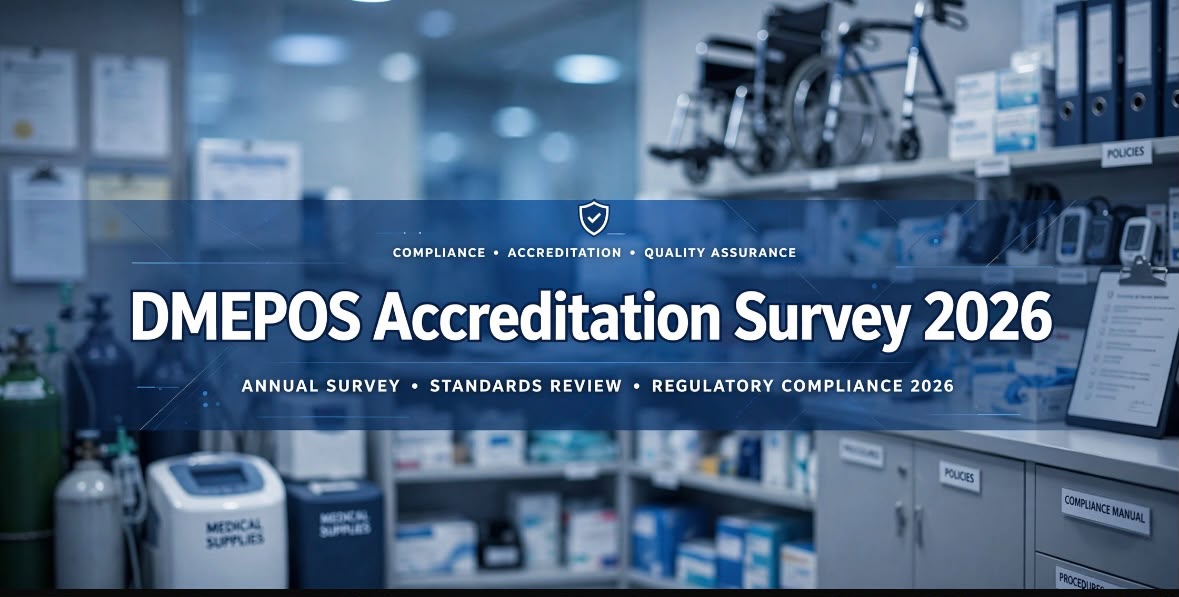
Preparing for a DMEPOS accreditation survey is an important step for medical equipment suppliers seeking to meet Medicare quality standards. The survey evaluates whether a supplier follows applicable requirements for patient care, documentation, safety, and business operations.
For suppliers providing durable medical equipment, prosthetics, orthotics, and supplies, understanding the survey process can make preparation easier and help prevent avoidable compliance issues.
This guide explains what happens during a DMEPOS accreditation survey, which areas surveyors may review, and how suppliers can prepare effectively.
What Is a DMEPOS Accreditation Survey?
A DMEPOS accreditation survey is an assessment conducted by an approved accreditation organization to determine whether a supplier meets the applicable quality standards.
The survey may involve reviewing policies, examining patient records, assessing equipment handling procedures, and interviewing staff. The exact process depends on the accreditation organization and the supplier’s services.
Why Is the Survey Important?
Accreditation helps demonstrate that a supplier maintains appropriate procedures for delivering equipment and supporting patients. Suppliers seeking Medicare enrollment generally need to meet applicable accreditation requirements unless an exemption applies.
Maintaining compliance also helps businesses identify operational weaknesses before they become serious problems.
What Happens During a DMEPOS Accreditation Survey?
Understanding the main stages can help suppliers prepare their facilities, employees, and documentation.
Review of Policies and Documentation
Surveyors may examine written policies, employee training records, patient documentation, complaint procedures, and other required business records.
Documentation should be accurate, current, organized, and consistent with actual business practices.
Facility and Equipment Inspection
The surveyor may assess the supplier’s premises, equipment storage, cleanliness, safety procedures, and inventory management, where applicable.
Suppliers should ensure that equipment is handled appropriately and that their facilities reflect the services they provide.
Staff Interviews and Procedure Review
Employees may be asked about their responsibilities, patient interactions, complaint handling, and relevant safety procedures.
Staff members should understand the policies that apply to their roles and follow them consistently in daily operations.
Patient Care and Record Assessment
Surveyors may review patient-related records and procedures to evaluate compliance with applicable requirements. This can include documentation practices, equipment delivery procedures, and patient instruction when relevant to the supplier’s services.
How to Prepare for a DMEPOS Accreditation Survey
Preparation should begin well before the scheduled survey. A structured review can help identify missing records and operational gaps.
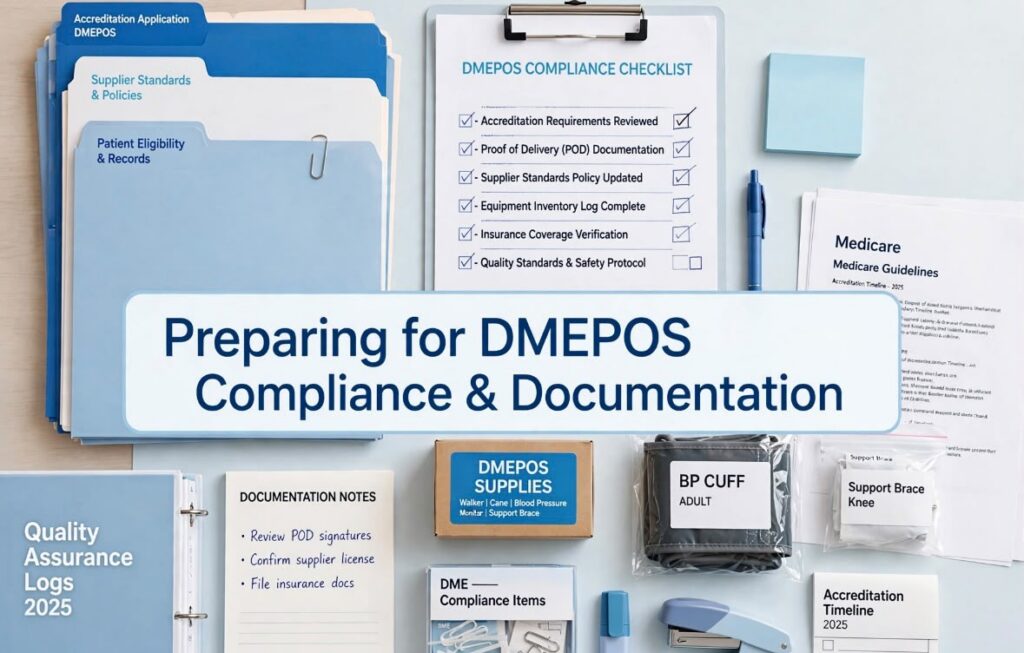
Organize Required Documents
Prepare applicable business licenses, policies, employee training records, complaint logs, and patient documentation. Confirm that records are complete and reflect actual practices.
Train Your Staff
Review relevant quality standards with employees and ensure they understand their duties. Training should be practical and appropriate to each employee’s responsibilities.
Conduct an Internal Compliance Review
Perform a mock survey to evaluate documentation, safety procedures, equipment handling, and policy implementation. Correct identified gaps and document the corrective actions taken.
Review Accreditation Requirements
Confirm the current requirements of your selected accreditation organization. Requirements may vary depending on the supplier’s services and applicable standards.
Common Mistakes to Avoid
DMEPOS suppliers can experience delays or compliance problems when they overlook basic preparation.
- Outdated or incomplete policies.
- Missing employee training records.
- Inconsistent patient documentation.
- Staff unfamiliar with established procedures.
- Failure to address previously identified deficiencies.
Reviewing these areas early can make the survey process more manageable.
What Happens After the Survey?
After the assessment, the accreditation organization evaluates its findings and determines the appropriate outcome under its procedures.
Corrective Actions
If deficiencies are identified, the supplier may need to submit a corrective action plan and provide evidence that the issues have been addressed. Additional review may be required depending on the findings.
Accreditation Decision
The organization communicates its decision according to its process. Suppliers should respond promptly to requests and maintain records demonstrating ongoing compliance.
Accreditation does not automatically guarantee Medicare enrollment; suppliers must also satisfy applicable enrollment requirements.
Frequently Asked Questions
How Long Does a DMEPOS Accreditation Survey Take?
The duration varies based on the supplier’s size, services, documentation, and accreditation organization’s procedures. Suppliers should confirm scheduling expectations directly with their accreditor.
Can a DMEPOS Accreditation Survey Be Unannounced?
Survey arrangements depend on the accreditation organization’s policies and applicable requirements. Suppliers should understand their accreditor’s rules rather than assume every survey is announced.
What Happens If a Supplier Fails the Survey?
The outcome depends on the deficiencies and the organization’s procedures. Corrective actions, additional review, or other consequences may apply.
How Often Is DMEPOS Accreditation Required?
Accreditation and renewal schedules depend on applicable requirements and the accreditation organization. Suppliers should monitor renewal dates and maintain compliance between surveys.
Conclusion
A DMEPOS accreditation survey evaluates whether a supplier follows the quality, documentation, safety, and operational requirements applicable to its business.
By organizing records, training employees, reviewing procedures, and correcting deficiencies early, suppliers can approach the process with greater confidence. Consistent compliance practices also help support long-term operational readiness and patient service quality.