
If you plan to start a Durable Medical Equipment (DME) business and bill Medicare, DMEPOS accreditation is one of the most important steps in the process. Many suppliers underestimate how detailed accreditation requirements can be until they begin preparing for surveys, documentation reviews, and Medicare enrollment.
This guide explains the real DMEPOS accreditation process in simple terms, including requirements, costs, timelines, inspections, common mistakes, and what suppliers should expect in 2026.
Whether you are a startup DME company or an existing supplier preparing for Medicare enrollment, understanding accreditation early can help you avoid delays and costly compliance problems.
Quick Answer
DMEPOS accreditation is a Medicare compliance requirement for most suppliers that provide durable medical equipment, prosthetics, orthotics, and medical supplies. To become accredited, suppliers must meet CMS quality standards, maintain operational policies, pass an on-site inspection, and receive approval from a CMS-approved accrediting organization.
Updated for 2026 DMEPOS Requirements
As Medicare compliance standards continue evolving, suppliers should stay updated on:
- documentation requirements
- supplier standards
- operational policies
- inspection readiness
- Medicare enrollment procedures
Businesses that prepare early typically move through accreditation faster and experience fewer survey issues.
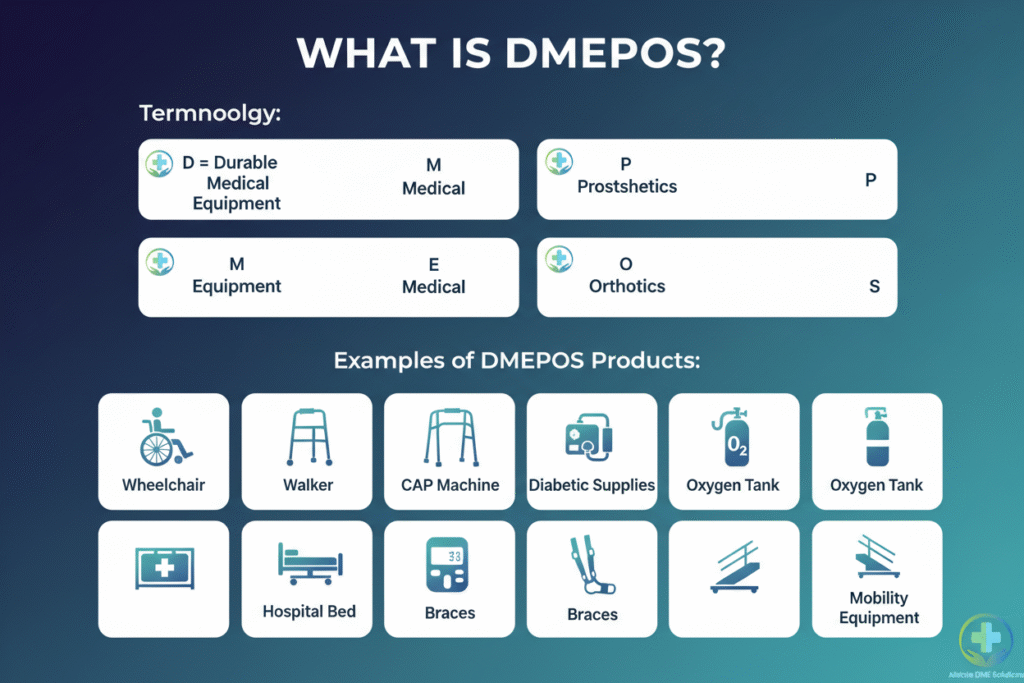
What Does DMEPOS Mean?
What Is DMEPOS Accreditation?
DMEPOS accreditation is a formal approval process that verifies whether a supplier meets Medicare quality and operational standards.
The process focuses on:
- patient safety
- compliance systems
- business operations
- documentation procedures
- equipment handling
- staff training
- supplier standards
Most suppliers must complete accreditation before receiving Medicare billing privileges.
Why DMEPOS Accreditation Is Important
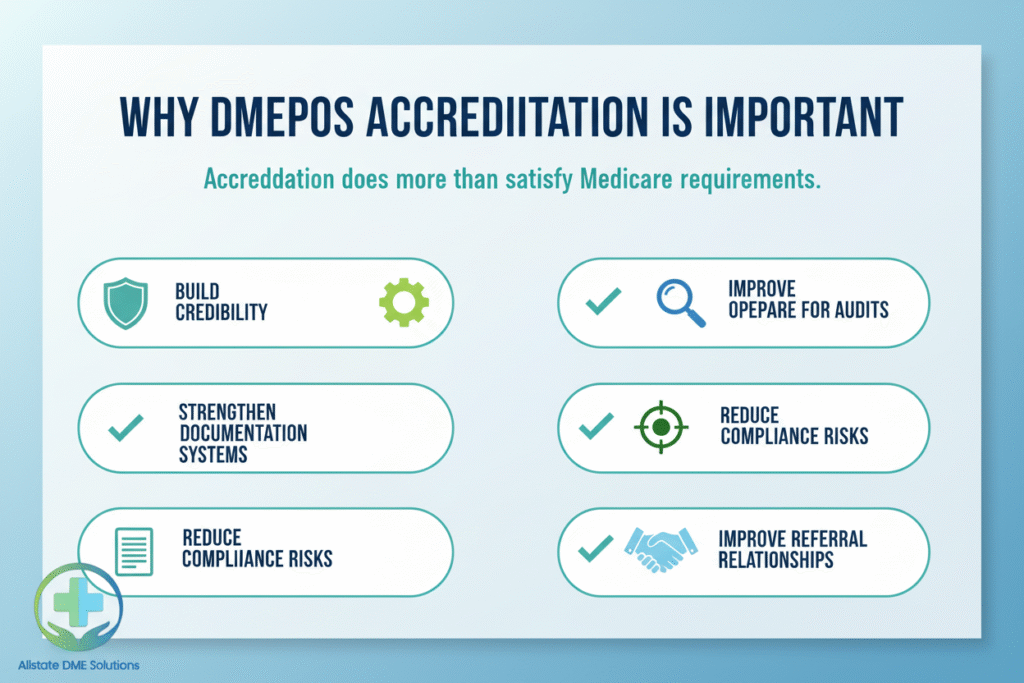
Many healthcare providers and referral partners prefer working with accredited suppliers because it demonstrates operational readiness and compliance.
What Is Required for DMEPOS Accreditation?
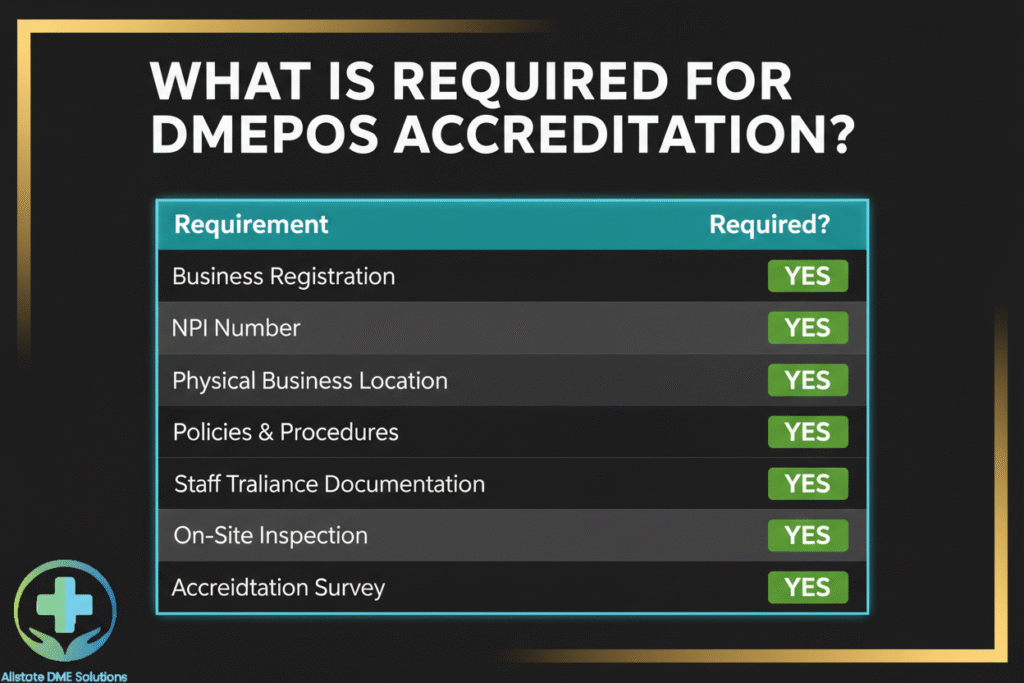
CMS-Approved Accrediting Organizations
Suppliers must work with a CMS-approved accrediting organization.
Some of the most common organizations include:
| Accrediting Organization | Common Focus |
|---|---|
| ACHC | Startup DME suppliers |
| The Compliance Team | Medicare-focused businesses |
| CHAP | Home healthcare and DME |
| NABP | Pharmacy-related suppliers |
| ABC | Orthotics and prosthetics |
Each organization has slightly different processes, fees, and survey methods.
Step-by-Step DMEPOS Accreditation Process
1. Register Your Business
Before beginning accreditation, suppliers should legally establish their business.
Most companies choose:
- LLC
- Corporation
You will also need:
- EIN Number
- business bank account
- physical office address
- state registrations
2. Obtain an NPI Number
The National Provider Identifier (NPI) is required for Medicare enrollment and DME operations.
This number identifies your business within the healthcare system.
3. Prepare Policies and Procedures
One of the biggest challenges for new suppliers is documentation preparation.
Your policies should address:
- HIPAA compliance
- infection control
- complaint handling
- delivery procedures
- patient rights
- emergency preparedness
- equipment maintenance
- staff training
Poor documentation is one of the most common reasons suppliers fail surveys.
4. Choose an Accrediting Organization
Different accrediting organizations may be better suited for different supplier types.
Factors suppliers often consider:
- cost
- survey process
- support
- product categories
- timeline
- experience with startups
Choosing the right organization can simplify the process significantly.
5. Prepare for the On-Site Inspection
The accreditation survey includes a physical inspection of your business operations.
Surveyors commonly review:
- office setup
- patient records
- inventory systems
- business signage
- compliance documentation
- staff training records
- supplier standards
- delivery procedures
Businesses that prepare early generally experience smoother inspections.
6. Complete Medicare Enrollment
After accreditation approval, suppliers typically proceed with:
- CMS-855S enrollment
- PECOS registration
- Medicare billing setup
This step is necessary before billing Medicare for DMEPOS products.
DMEPOS Accreditation Costs in 2026
The cost of accreditation varies depending on business size, locations, and operational complexity.
| Expense | Estimated Cost |
|---|---|
| Accreditation Fees | $3,000 – $10,000+ |
| Policies & Procedures | $1,000 – $5,000 |
| Consulting Services | Varies |
| Inspection Preparation | Varies |
| Medicare Enrollment | Additional |
Businesses with multiple locations or specialized services may have higher compliance costs.
How Long Does DMEPOS Accreditation Take?
The accreditation timeline depends on:
- documentation readiness
- office preparation
- survey scheduling
- correction requests
- staffing
- Medicare enrollment timing
Many suppliers spend several weeks or months preparing for full approval.
Starting early usually helps reduce delays.
Common DMEPOS Accreditation Mistakes
Many suppliers run into avoidable issues during the accreditation process.
Common problems include:
- incomplete policies
- poor documentation systems
- missing supplier standards
- untrained staff
- weak inventory organization
- incorrect applications
- lack of inspection preparation
These issues frequently delay approval or create additional survey requirements.
DMEPOS Site Inspection Checklist
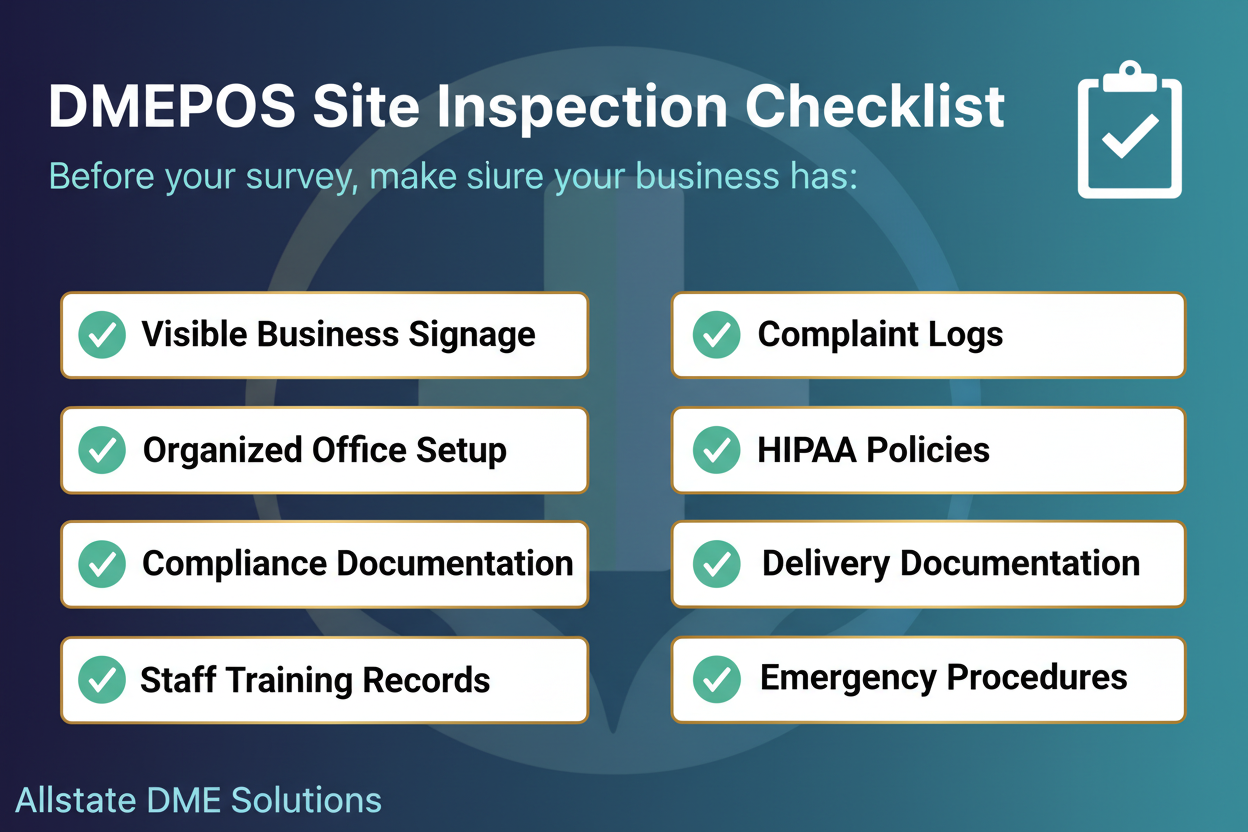
A well-prepared office creates a much smoother inspection experience.
Do You Need a Physical Office?
Yes. Most DME suppliers must maintain a physical business location that meets Medicare operational requirements.
Surveyors often inspect:
- office operations
- storage areas
- documentation systems
- inventory setup
- signage
- patient records
Virtual-only operations may not qualify for Medicare supplier approval.
How Accreditation Helps Your Business
Proper accreditation preparation can help businesses:
- qualify for Medicare billing
- improve compliance systems
- reduce audit risks
- strengthen operational processes
- improve credibility
- increase referral opportunities
Many suppliers view accreditation as the foundation for long-term business growth.
Frequently Asked Questions
Is DMEPOS accreditation required for Medicare billing?
Yes. Most suppliers must obtain accreditation before receiving Medicare billing privileges.
How long does accreditation remain active?
Most accreditation approvals remain valid for several years, depending on the accrediting organization and compliance status.
Can startups get accredited?
Yes. Many startup DME businesses begin accreditation before completing Medicare enrollment.
What happens during a DMEPOS survey?
Surveyors review:
- policies
- documentation
- office setup
- inventory systems
- compliance procedures
- staff readiness
How much does DMEPOS accreditation cost?
Costs vary based on the accrediting organization, business size, and preparation needs, but many suppliers spend several thousand dollars during the process.
Is a physical office required?
In most cases, yes. Medicare suppliers generally need a compliant physical location for inspections and operations.
Final Thoughts
DMEPOS accreditation is one of the most important parts of building a compliant Medicare DME business. Suppliers who prepare properly for documentation, inspections, operational setup, and Medicare requirements typically experience fewer delays and stronger long-term growth.
Understanding the process early helps businesses avoid common mistakes, improve compliance readiness, and create a stronger operational foundation for success in the growing DME industry.