
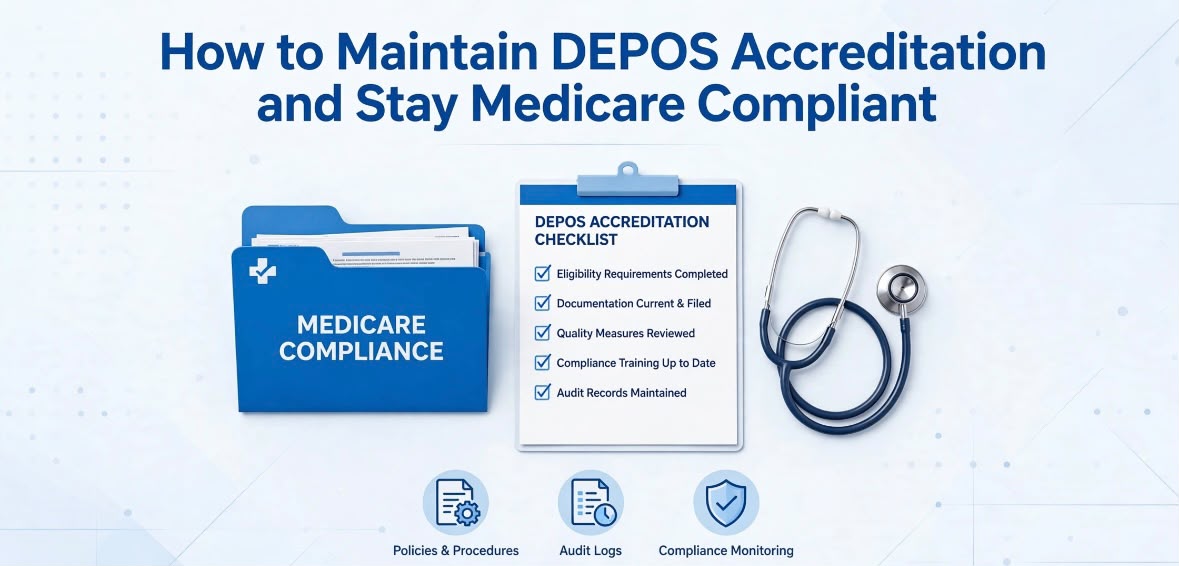
Maintaining DEPOS accreditation is an important responsibility for medical equipment suppliers seeking to participate in the Medicare program. For suppliers of Durable Medical Equipment, Prosthetics, Orthotics, and Supplies (DMEPOS), ongoing compliance involves more than completing an initial accreditation process. It requires consistent attention to quality standards, documentation, staff training, and operational procedures.
For US-based suppliers, a proactive compliance strategy can help reduce the risk of accreditation deficiencies, enrollment issues, and disruptions to Medicare billing. By establishing clear internal procedures and regularly reviewing business practices, suppliers can maintain accreditation and support long-term operational stability.
Why Maintaining DEPOS Accreditation Matters
Accreditation demonstrates that a supplier has been evaluated against applicable quality and operational standards. However, businesses must continue meeting relevant requirements after accreditation is granted.
Protecting Medicare Enrollment
DMEPOS suppliers must satisfy applicable Medicare enrollment and supplier standards to maintain their ability to bill Medicare. Accreditation alone does not guarantee continued enrollment or compliance.
Keeping accreditation current and maintaining accurate enrollment information can help suppliers avoid preventable administrative problems.
Supporting Quality Patient Care
Compliance procedures help ensure that patients receive appropriate equipment, reliable service, and clear instructions. Consistent staff training and documented processes also support accountability across daily operations.
Key Steps to Maintain DEPOS Accreditation
1. Keep Policies and Procedures Updated
Review your policies regularly to ensure they reflect current business operations and applicable accreditation requirements. Written procedures should address patient interactions, equipment handling, complaints, recordkeeping, and quality management.
Update documentation whenever operational changes affect how services are delivered.
2. Maintain Complete and Accurate Records
Documentation is essential for demonstrating compliance during accreditation surveys and Medicare reviews.
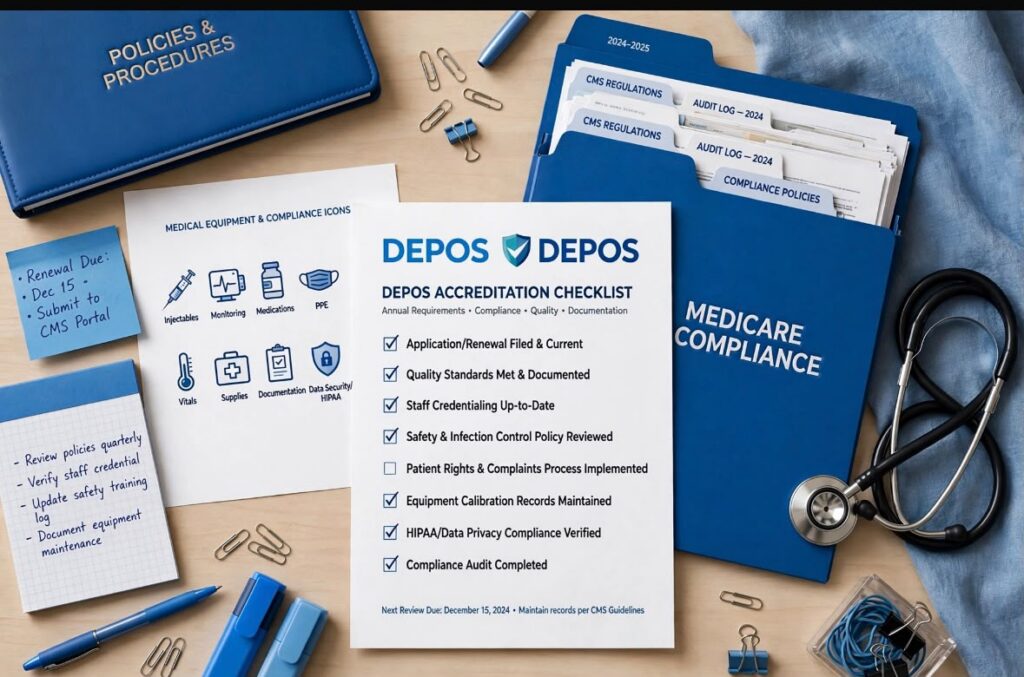
Suppliers should maintain organized records, including:
- Patient service and equipment delivery documentation
- Written policies and procedures
- Staff training and competency records
- Complaint logs and corrective action reports
- Equipment maintenance records, where applicable
- Required business licenses and supplier documentation
Records should be accurate, accessible to authorized personnel, and retained according to applicable requirements.
3. Conduct Regular Internal Audits
Internal audits help identify weaknesses before they become significant compliance concerns. Review a representative sample of records, operational procedures, and staff practices against applicable requirements.
Document each finding, assign responsibility for corrective action, and verify that the issue has been resolved.
4. Train Employees on Compliance Responsibilities
Employees should understand the procedures relevant to their roles. Training may cover patient privacy, documentation, complaint handling, equipment delivery, billing practices, and other applicable requirements.
Maintain training records and provide additional instruction whenever policies change or internal reviews identify knowledge gaps.
Preparing for Accreditation Surveys
Accreditation surveys assess whether a supplier continues to meet the applicable standards of its selected accrediting organization.
Keep Survey Documentation Ready
Do not wait until a survey is scheduled to organize your records. Maintain a central, regularly updated compliance file containing current policies, training evidence, quality improvement documentation, and other required records.
Address Deficiencies Promptly
If a survey identifies deficiencies, carefully review the findings and follow the accrediting organization’s instructions and deadlines. Develop a corrective action plan that identifies the underlying cause, the steps required, and the person responsible for implementation.
Verify that corrective measures are effective and maintain evidence of the work completed.
Staying Compliant With Medicare Requirements
Accreditation and Medicare compliance are related, but they are not identical. Suppliers must also meet applicable Medicare enrollment, billing, and supplier requirements.
Monitor Enrollment and Business Information
Keep required enrollment information accurate and report changes within the applicable deadlines. Review business ownership, location, licensing, and other information that may affect enrollment obligations.
Review Billing and Documentation Practices
Ensure that claims are supported by the documentation required for the specific item or service. Review applicable coverage, order, delivery, and medical necessity requirements before submitting claims.
When questions arise, consult current Medicare guidance or a qualified compliance professional.
Common Mistakes That Can Put Accreditation at Risk
Several avoidable issues can undermine a supplier’s compliance efforts:
- Using outdated policies that no longer reflect actual operations
- Failing to document employee training
- Ignoring recurring audit findings
- Maintaining incomplete patient or delivery records
- Missing required enrollment updates or accreditation deadlines
- Making operational changes without reviewing their compliance impact
A consistent review process helps suppliers identify these risks early and address them before they escalate.
Building a Sustainable Compliance Program
Maintaining accreditation is most effective when compliance becomes part of everyday operations rather than a last-minute preparation task.
Assign a compliance lead, establish a review schedule, track corrective actions, and communicate responsibilities to staff. Management should periodically evaluate whether existing procedures remain effective and whether additional training or process improvements are needed.
For complex accreditation or enrollment questions, professional guidance can help suppliers understand their obligations and prepare appropriate documentation.
Frequently Asked Questions
How often should DEPOS compliance procedures be reviewed?
Review procedures regularly and whenever applicable requirements, business operations, or accreditation standards change. The frequency of formal reviews should also reflect the accrediting organization’s requirements.
Does accreditation automatically guarantee Medicare compliance?
No. Accreditation is one component of the requirements applicable to many DMEPOS suppliers. Medicare enrollment, billing, licensing, and supplier standards must also be satisfied as applicable.
What documents should suppliers prepare for an accreditation survey?
Common records include current policies, employee training documentation, patient service records, complaint logs, corrective action plans, and applicable licenses. The exact documentation depends on the accrediting organization and the supplier’s operations.
What should a supplier do after receiving a deficiency notice?
Review the findings, follow the accrediting organization’s instructions, develop a documented corrective action plan, and complete the required actions within the specified deadlines.
Can a compliance consultant help maintain accreditation?
A qualified consultant may help review documentation, identify potential gaps, organize survey preparation, and develop corrective action procedures. The supplier remains responsible for meeting its applicable requirements.