
Starting a medical supply company sounds simple at first. You find products, open a store, and begin selling equipment. Many new entrepreneurs assume the process works that way. The reality looks very different.
Durable medical equipment businesses operate in a highly regulated healthcare environment. Government programs, insurance providers, and patients all rely on safe medical products. Because of this, strict rules control who can supply medical equipment.
One of the most common questions new owners ask is simple. Do I need accreditation before opening a durable medical equipment company? The answer depends on how the business plans to operate.
Understanding the role of DME business accreditation helps entrepreneurs avoid delays, rejected applications, and compliance issues. This guide explains what accreditation means, when it becomes necessary, and how it affects your business operations.
What Is a DME Business?
A durable medical equipment business supplies medical products that patients use in their homes. These products support recovery, mobility, and long-term care needs. Many patients rely on these devices after hospital visits or surgery.
Common durable medical equipment includes wheelchairs, walkers, oxygen equipment, hospital beds, and diabetic supplies. Some companies also provide orthotics and prosthetics.
Patients often receive these items through healthcare programs such as Medicare or private insurance providers. Because public healthcare funds may pay for these supplies, strict quality and safety rules apply.
DME suppliers must maintain accurate records, provide safe products, and follow healthcare regulations. Accreditation exists to confirm that suppliers meet these standards.
What Does Accreditation Mean for a DME Supplier?
Accreditation is an official review process performed by an approved accreditation organization. These organizations inspect and evaluate a medical supplier’s operations.
The purpose is simple. They confirm that the company follows healthcare quality standards and patient safety requirements.
During the review process, inspectors examine several parts of the business. They check documentation procedures, product handling, storage systems, and staff training practices.
Accreditation organizations also review customer service procedures and complaint management systems. These steps ensure patients receive reliable medical equipment and proper support.
For many suppliers, DME business accreditation becomes necessary when they want to bill Medicare for equipment.
Is Accreditation Required to Start a DME Business?
A business can technically open without accreditation. However, most successful suppliers eventually need it.
The main reason involves Medicare participation. Many patients depend on Medicare to cover medical equipment costs. To bill Medicare, suppliers must meet specific federal requirements.
One of the most important requirements is accreditation from a recognized organization. Without this approval, Medicare enrollment will not move forward.
This means a company that plans to work with Medicare must complete the accreditation process before receiving billing privileges.
Businesses that only sell products directly to consumers may operate without it. Still, skipping accreditation limits growth opportunities and insurance partnerships.
Why Accreditation Matters for DME Businesses
Accreditation does more than satisfy government rules. It also improves trust and professional credibility.
Healthcare providers prefer working with suppliers who meet national standards. Accreditation signals that the company understands healthcare compliance and patient safety.
Insurance companies also review accreditation status before approving suppliers. Without it, many reimbursement opportunities disappear.
Patients and caregivers often search for reliable equipment providers. Accreditation helps demonstrate that the supplier follows established healthcare standards.
For growing companies, DME business accreditation can open doors to larger healthcare networks and long term contracts.
Who Provides DME Accreditation?
Several recognized accreditation organizations evaluate medical equipment and suppliers. These organizations follow national healthcare standards and federal regulations.
Each organization reviews similar operational requirements. The evaluation process usually includes documentation review and an on site inspection.
Inspectors confirm that suppliers follow policies covering equipment quality, record keeping, and patient support procedures.
Some organizations focus on pharmacies and medical supply providers. Others evaluate a wider range of healthcare suppliers.
Regardless of the organization, the goal remains the same. The supplier must demonstrate compliance with healthcare safety standards.
Key Requirements for DME Accreditation
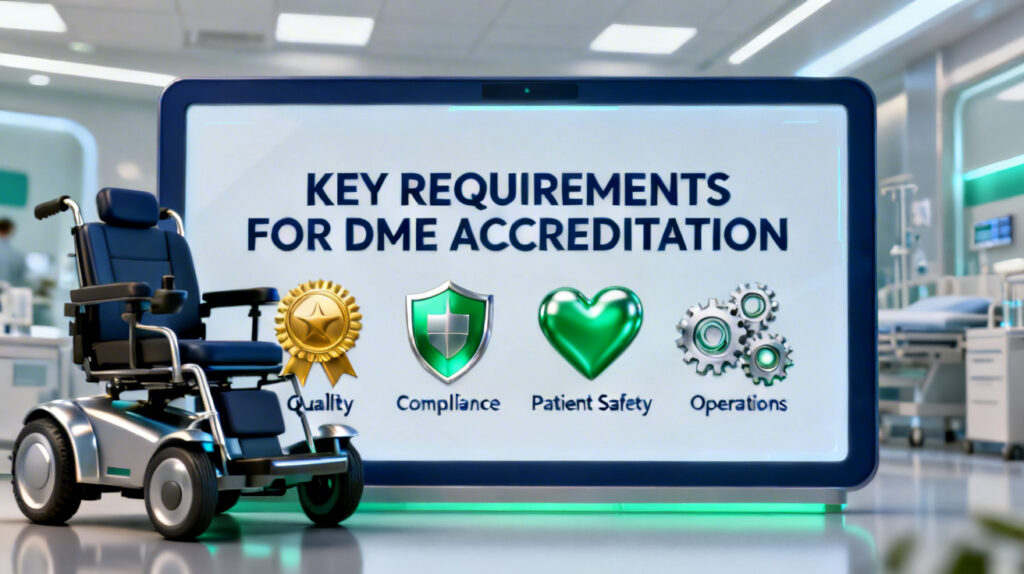
Accreditation organizations examine multiple parts of a medical equipment business. Each requirement focuses on patient safety and reliable operations.
Business Documentation
Suppliers must maintain clear policies and written procedures. These documents explain how the business handles equipment, patient records, and service complaints.
Inspectors expect organized documentation that staff members can easily follow.
Quality Control Systems
Businesses must maintain systems that monitor product quality. This includes equipment maintenance schedules and safety checks.
Suppliers must also track product recalls and manufacturer safety alerts.
Staff Training
Employees must understand how to handle medical equipment correctly. Training ensures staff members provide accurate instructions to patients.
Proper education also reduces the risk of equipment misuse.
Facility Standards
The physical business location must meet healthcare safety standards. Storage areas must protect equipment from damage and contamination.
Inspectors also review security procedures and access control.
Patient Service Procedures
Suppliers must maintain a system for handling customer complaints and service issues. Clear communication helps resolve problems quickly.
Patients must receive instructions on how to use the equipment safely.
Steps to Get Accredited for a DME Business
Entrepreneurs often assume the accreditation process is complicated. In reality, it follows a structured sequence of steps.
Step 1: Establish the Business
Start by forming the company legally. Register the business name and obtain the required licenses. Choose a physical location that meets healthcare facility standards.
Step 2: Prepare Policies and Procedures
Accreditation organizations expect written operational policies. These documents explain how the business manages inventory, patient records, and equipment delivery.
Clear policies help staff follow consistent procedures.
Step 3: Submit an Accreditation Application
After preparing documentation, submit an application to an approved accreditation organization. The organization will review the application and schedule an inspection.
Step 4: Undergo an On-Site Survey
Inspectors visit the business location during the survey. They review documents, interview staff members, and inspect storage areas.
The goal is to confirm that the business follows healthcare quality standards.
Step 5: Receive Accreditation Approval
Once the organization confirms compliance, the business receives accreditation approval. This approval allows the supplier to move forward with Medicare enrollment.
At this stage, DME business accreditation becomes an important credential for insurance partnerships and healthcare networks.
How Long Does DME Accreditation Take?
The timeline varies depending on preparation and documentation quality. Many businesses complete the process within several months.
Preparing policies and organizing documents often takes the most time. Companies that prepare early usually experience smoother inspections.
After approval, accreditation organizations may conduct periodic reviews. These reviews ensure suppliers continue meeting healthcare standards.
Common Mistakes New DME Businesses Make
Many entrepreneurs underestimate healthcare compliance requirements. This often leads to delays during accreditation inspections.
One common mistake involves incomplete documentation. Missing policies or unclear procedures create problems during the review process.
Another issue involves improper equipment storage. Inspectors expect organized inventory systems and safe product handling.
Some businesses also fail to train employees properly. Staff members must understand how to assist patients with medical equipment.
Avoiding these mistakes makes the accreditation process easier and faster.
Final Thoughts
Opening a durable medical equipment company requires careful planning. Healthcare regulations shape how suppliers operate and serve patients.
Accreditation plays a central role in this system. It confirms that suppliers meet safety standards and provide reliable medical equipment.
Businesses that plan to bill Medicare will almost always need this approval. Without it, participation in federal healthcare programs becomes impossible.
For entrepreneurs entering the healthcare supply industry, understanding DME business accreditation early prevents costly mistakes. Proper preparation allows the business to grow with confidence and credibility.
With strong policies, trained staff, and organized operations, suppliers can complete the accreditation process successfully and build a trusted healthcare business.