
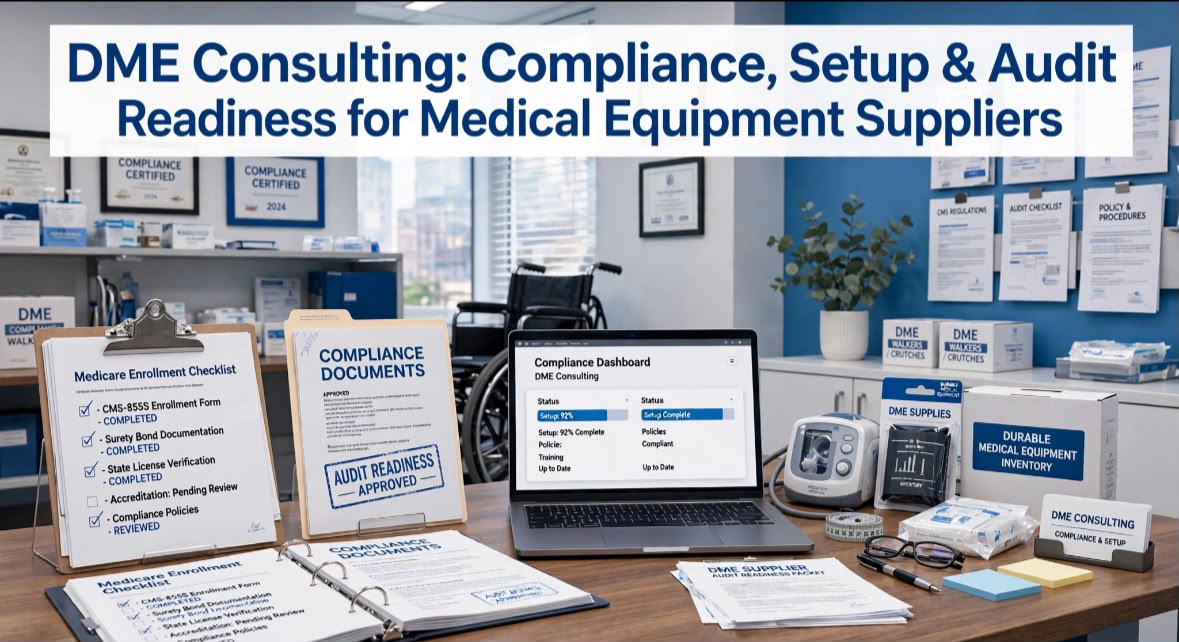
Starting or managing a Durable Medical Equipment (DME) business requires more than offering quality medical products. Suppliers must navigate licensing requirements, Medicare enrollment, accreditation standards, documentation procedures, and ongoing compliance responsibilities. Without a clear plan, even small administrative mistakes can delay operations or create problems during an audit.
DME consulting helps suppliers understand these requirements, establish efficient business processes, and prepare for regulatory reviews. Whether you are launching a new DME company or improving an existing operation, professional guidance can help you build a stronger compliance foundation.
What Is DME Consulting?
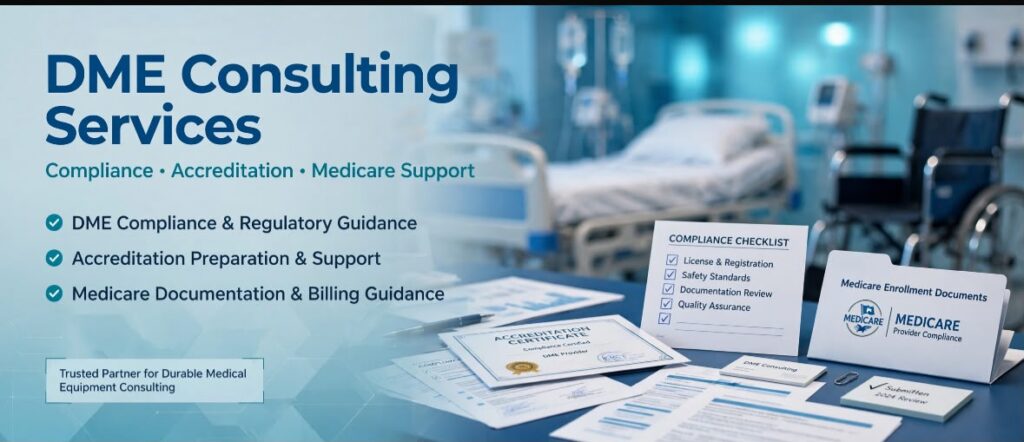
DME consulting provides specialized guidance to businesses that supply durable medical equipment to patients, healthcare providers, and eligible insurance beneficiaries. Consultants may assist with business setup, Medicare enrollment, accreditation preparation, documentation systems, and compliance procedures.
The goal is to help suppliers understand applicable requirements and organize their operations before problems arise. Consulting services vary, so businesses should confirm which services are included and whether the consultant has experience with their specific products, payer arrangements, and state requirements.
How DME Consulting Supports Business Setup
1. Business Registration and Licensing
Launching a DME business involves identifying the appropriate business structure, completing registration requirements, and determining which licenses or permits apply. Requirements can vary by state and by the types of equipment supplied.
A DME consultant can help owners develop a setup checklist, identify relevant regulatory agencies, and organize required paperwork. However, business registration and professional consulting do not replace any required state approvals.
2. Medicare Enrollment and Accreditation
Suppliers seeking Medicare reimbursement must meet applicable supplier standards and enrollment requirements. Depending on the business and its products, accreditation may also be required.
Consulting support may include preparing enrollment documentation, reviewing operational policies, and coordinating accreditation readiness. Businesses should verify their specific obligations with the Centers for Medicare & Medicaid Services (CMS) and the appropriate accreditation organization.
3. Policies, Procedures, and Documentation
Clear policies help DME suppliers maintain consistent operations and demonstrate that required processes are being followed.
Consultants may assist with organizing procedures for order documentation, delivery records, billing controls, complaint handling, and record retention. These documents should reflect actual business practices rather than simply exist for inspection purposes.
Why Compliance Matters for DME Suppliers
Compliance is an ongoing responsibility, not a one-time setup task. Suppliers must maintain accurate records, follow applicable billing rules, and meet relevant federal and state requirements.
Effective compliance practices can help businesses:
- Reduce avoidable documentation errors.
- Maintain organized patient and order records.
- Improve internal workflows.
- Identify potential billing and operational risks.
- Prepare for accreditation surveys and other reviews.
A reliable compliance process also helps staff understand their responsibilities and follow consistent procedures.
How to Prepare for a DME Audit
Review Documentation and Billing Records
Suppliers should make sure their records support the services and equipment billed. Depending on the applicable requirements, documentation may include orders, proof of delivery, medical necessity records, and billing information.
Evaluate Internal Procedures
Review whether staff follow established policies and whether those policies reflect current requirements. Identify gaps and assign responsibility for correcting them.
Conduct a Compliance Readiness Review
A mock audit or internal review can help identify missing records, inconsistent documentation, and process weaknesses before an external review occurs.
Train Employees Regularly
Employees should understand documentation standards, billing procedures, privacy responsibilities, and escalation processes. Training should be updated when relevant rules or business procedures change.
Choosing the Right DME Consulting Firm
The right consultant should understand the regulatory environment in which your business operates and provide practical, clearly defined services.
Before hiring a provider, consider its experience with DME suppliers, familiarity with Medicare enrollment and accreditation, approach to compliance documentation, and ability to explain requirements clearly.
Ask for a written scope of work, expected timelines, fee details, and an explanation of what happens if additional compliance issues are identified. No consultant can guarantee Medicare approval or a successful audit outcome.
Frequently Asked Questions
What does a DME consultant do?
A DME consultant helps medical equipment suppliers navigate business setup, licensing considerations, Medicare enrollment, accreditation preparation, documentation, and compliance processes. Services depend on the consultant’s expertise and the client’s needs.
Is DME consulting necessary to start a medical equipment business?
Hiring a consultant is not universally required. However, professional guidance may help new suppliers understand complex requirements, organize documentation, and avoid preventable setup mistakes.
Does every DME supplier need Medicare accreditation?
Not every business has identical requirements. Suppliers seeking Medicare reimbursement must meet applicable enrollment and supplier standards, and accreditation requirements depend on the relevant supplier category and circumstances. Confirm your obligations with CMS.
How can DME consulting help with audit readiness?
Consultants may review policies, examine documentation workflows, identify gaps, and help prepare corrective action plans. Actual readiness depends on the supplier’s records, operations, and compliance with applicable rules.
How long does DME business setup take?
Timelines vary depending on state licensing, accreditation, enrollment, location requirements, and the completeness of the application. Missing documents or required corrections can cause delays.
What documents should DME suppliers maintain?
Depending on the products and applicable rules, suppliers may need enrollment records, licenses, accreditation documentation, orders, proof of delivery, billing records, written policies, and staff training records.
Can a DME consultant guarantee Medicare approval?
No. A consultant can help organize an application and address identified gaps, but approval decisions remain with the relevant authorities.
Final Thoughts
DME consulting can provide valuable support for suppliers navigating compliance, business setup, and audit readiness. By organizing documentation, reviewing internal procedures, and addressing gaps early, businesses can establish more reliable operations and better understand their regulatory responsibilities.
The most effective approach combines qualified professional guidance with ongoing staff training, accurate records, and regular internal compliance reviews.