
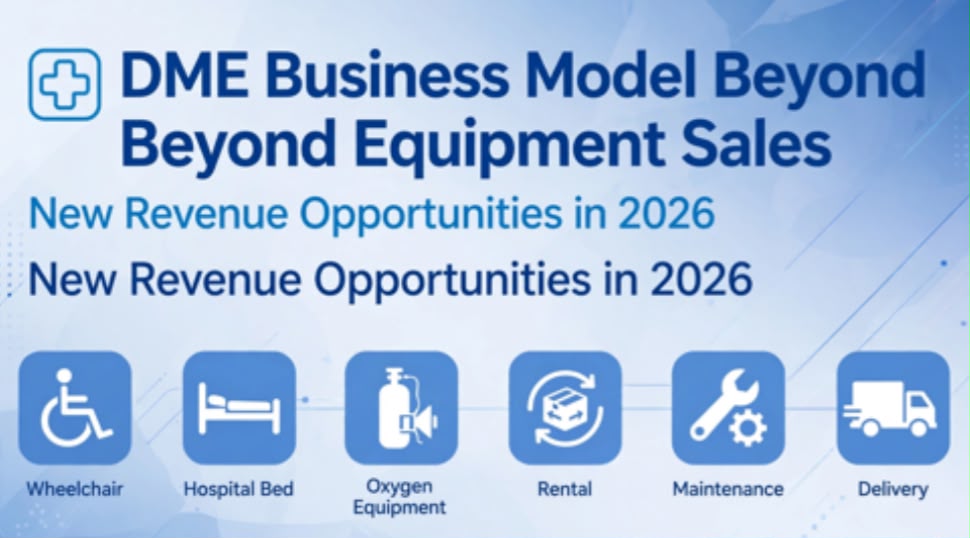
The durable medical equipment (DME) industry offers opportunities beyond selling wheelchairs, hospital beds, oxygen equipment, and other medical supplies. As healthcare increasingly focuses on home-based care and long-term patient support, DME businesses can expand through equipment rentals, maintenance services, patient support, and recurring service contracts.
For businesses looking to improve profitability and build long-term customer relationships, developing a broader DME business model can create new revenue streams while supporting better patient experiences.

What Is the DME Business Model?
A DME business model explains how a company provides durable medical equipment and related services while generating revenue. Traditionally, many DME providers focus on selling equipment to patients, caregivers, healthcare facilities, and other buyers.
However, businesses can expand beyond one-time sales by offering services that support equipment use throughout the patient care journey.
Traditional DME Sales Model
The traditional model focuses on purchasing equipment from manufacturers or distributors and reselling it to customers. Revenue comes primarily from product sales, with profitability depending on purchasing costs, reimbursement arrangements, operating expenses, and demand.
Modern DME Service-Based Model
A modern DME business may combine equipment sales with rentals, repairs, delivery, training, and ongoing customer support. These additional services can help businesses diversify revenue and build stronger relationships with healthcare providers and patients.
5 DME Business Models Beyond Equipment Sales
1. Medical Equipment Rental Services
Equipment rental allows customers to access medical products without purchasing them outright. This can be useful for patients recovering from surgery, individuals with temporary mobility limitations, and caregivers who need equipment for a limited period.
Common rental products include wheelchairs, hospital beds, mobility aids, and selected respiratory equipment.
To operate successfully, businesses need clear rental agreements, equipment inspection procedures, cleaning protocols, and reliable delivery and collection systems.
2. Equipment Maintenance and Repair
DME providers can generate additional revenue by offering equipment servicing, troubleshooting, and repairs where permitted by manufacturer instructions and applicable regulations.
Maintenance services can help healthcare facilities and customers keep equipment in suitable working condition while reducing avoidable downtime.
Businesses should establish service schedules, document completed work, and use qualified technicians for equipment requiring specialized expertise.
3. Delivery, Installation, and Setup
Convenient delivery and professional setup can become valuable services, especially for customers who need hospital beds, mobility equipment, or other products installed at home.
A DME company can offer scheduled delivery, equipment demonstrations, setup assistance, and collection services. Pricing and service arrangements should be transparent, and any reimbursement must comply with applicable payer rules.
4. Subscription and Ongoing Support Services
Some DME businesses can develop recurring service arrangements for eligible customers and healthcare organizations. Depending on the equipment and applicable rules, these may include routine maintenance, technical assistance, or scheduled supply deliveries.
Subscriptions should provide clearly defined services rather than charging customers repeatedly for products or services already covered by a payer.
5. Consulting and Compliance Support
Experienced DME businesses may explore consulting services for organizations that need assistance with operational processes, documentation, inventory management, or regulatory readiness.
Companies must ensure that consulting activities are within their expertise and do not misrepresent accreditation, licensing, reimbursement eligibility, or compliance guarantees.
How to Build a Profitable DME Business Model
Identify Your Target Market
Determine whether your primary customers will be individual patients, caregivers, hospitals, rehabilitation facilities, home health agencies, or other healthcare organizations.
Understanding customer needs helps you select the right products and services instead of investing in unnecessary inventory.
Develop Multiple Revenue Streams
Consider combining equipment sales with rentals, servicing, delivery, and other appropriate support services. Evaluate each service based on demand, operating costs, staffing requirements, and expected margins.
Invest in Inventory and Service Management
Effective inventory tracking helps businesses monitor available equipment, rental status, maintenance requirements, and product returns. Organized systems can reduce losses and improve service reliability.
Understand Medicare and Insurance Requirements
DME businesses that serve Medicare beneficiaries must follow applicable supplier enrollment, documentation, coverage, billing, and accreditation requirements.
Not every product or service is reimbursable. Businesses should verify coverage rules and payer contracts before promising reimbursement or including services in a billing arrangement.
Common Challenges in Expanding a DME Business
Regulatory and Reimbursement Complexity
Medicare and commercial insurers have specific requirements for covered products, supplier eligibility, documentation, and claims. Incorrect billing or incomplete records can lead to denied claims and compliance risks.
Equipment Maintenance and Logistics
Rental and service-based models require equipment tracking, cleaning, inspection, transportation, and timely customer support. These responsibilities can increase operating costs if processes are not managed efficiently.
Cash Flow and Profitability
Additional services may require investment in vehicles, technicians, software, and inventory. Businesses should calculate the full cost of delivering each service before expanding.
Frequently Asked Questions
Can a DME business make money without selling medical equipment?
Yes. Depending on the business model and applicable requirements, revenue may come from equipment rentals, repairs, maintenance, delivery, and consulting services.
Are DME equipment rentals profitable?
They can be profitable when utilization is strong and rental income covers equipment costs, maintenance, cleaning, transportation, storage, and administrative expenses. Results vary by product and market.
Can DME companies offer subscription services?
Some can offer recurring service arrangements, provided the services are clearly defined and comply with applicable laws, payer contracts, and reimbursement requirements.
Does a DME business need Medicare accreditation?
A supplier seeking Medicare billing privileges for covered DMEPOS generally must meet applicable accreditation requirements unless an exemption applies. Requirements depend on the supplier’s circumstances and services.
How can a DME company increase revenue?
A company can evaluate rentals, equipment servicing, delivery and setup, suitable recurring services, and business-to-business partnerships while maintaining compliance and controlling operating costs.
Conclusion
The DME business model can extend well beyond medical equipment sales. Rentals, maintenance, delivery, ongoing support, and consulting may provide additional opportunities for companies seeking diversified revenue.
The strongest approach is to select services that match customer demand, calculate their true operating costs, and build reliable systems for equipment management and regulatory compliance. By focusing on both service quality and financial sustainability, DME businesses can create a more adaptable model for the evolving healthcare market.