
DME License Requirements in Florida: Everything You Need to Know (2026 Guide)
Starting a Durable Medical Equipment (DME) business in Florida offers an excellent opportunity to serve patients while building a profitable healthcare company. With Florida’s growing senior population and increasing demand for home healthcare services, the need for quality medical equipment suppliers continues to rise.
However, before selling or renting wheelchairs, hospital beds, oxygen equipment, CPAP machines, walkers, diabetic supplies, and other medical products, you must meet both Florida state and federal regulatory requirements.
Understanding the DME license requirements in Florida is essential to avoid delays, penalties, and compliance issues. This guide explains everything you need to know about licensing, accreditation, Medicare enrollment, and the steps required to launch a successful DME business in Florida.
What Is a DME License?
A Durable Medical Equipment (DME) license authorizes a business to provide medical equipment that patients use repeatedly in their homes or healthcare settings. These products help individuals manage chronic conditions, recover from injuries, or maintain independence.
Depending on your business model, you may sell, rent, deliver, or service these products while complying with applicable state and federal regulations.
Do You Need a DME License in Florida?
Yes. Most businesses that provide Durable Medical Equipment in Florida must comply with state licensing requirements and applicable federal regulations.
If you plan to bill Medicare or Medicaid, additional requirements such as DMEPOS accreditation and Medicare supplier enrollment will also apply.
Meeting these requirements demonstrates that your business operates safely, ethically, and according to recognized healthcare standards.
Florida DME License Requirements
Starting a compliant DME company involves several important steps.
1. Register Your Business
Before applying for licenses, establish your business legally.
This typically includes:
- Choosing your business structure (LLC, Corporation, or Partnership)
- Registering with the Florida Department of State
- Obtaining an Employer Identification Number (EIN) from the IRS
- Registering for applicable Florida tax requirements
- Opening a dedicated business bank account
A properly registered business forms the foundation of your licensing process.
2. Obtain the Appropriate Florida License
Depending on the products and services you provide, you may need to apply for the appropriate Florida healthcare license through the relevant state regulatory agency.
Your application generally requires:
- Business registration documents
- Ownership information
- Facility details
- Required application fees
- Supporting documentation
Incomplete applications can delay approval, so careful preparation is important.
3. Obtain DMEPOS Accreditation
If your goal is to bill Medicare, accreditation is one of the most important requirements.
Accreditation confirms that your business meets nationally recognized quality standards for:
- Patient care
- Equipment management
- Infection control
- Staff training
- Documentation
- Safety procedures
- Quality improvement
Accreditation also prepares your company for regulatory inspections and ongoing compliance.
4. Complete Medicare Supplier Enrollment
Many DME companies generate a significant portion of their revenue through Medicare reimbursement.
To become an approved Medicare supplier, you’ll typically need to:
- Complete supplier enrollment
- Meet Medicare supplier standards
- Obtain accreditation (when required)
- Maintain all supporting documentation
- Comply with CMS regulations
Proper enrollment helps ensure you can submit claims and receive reimbursement for covered equipment.
5. Maintain a Physical Business Location
Florida generally requires DME businesses to operate from a legitimate commercial location.
Your facility should:
- Be accessible during posted business hours
- Meet local zoning requirements
- Provide secure storage for equipment
- Maintain organized records
- Present a professional environment for inspections
Virtual offices or residential locations may not satisfy all regulatory requirements, depending on your business model.
6. Pass Background Screening
Business owners and certain personnel may be required to complete background screening as part of the licensing process.
Maintaining ethical business practices is an important part of healthcare compliance.
7. Carry Business Insurance
Proper insurance protects both your business and your patients.
Many DME suppliers maintain:
- General liability insurance
- Product liability coverage
- Commercial property insurance
- Workers’ compensation (when applicable)
Insurance requirements vary depending on your operations.
8. Develop Policies and Procedures
Every successful DME company should maintain written operational policies covering:
- Patient intake
- Equipment delivery
- Infection control
- Complaint resolution
- Equipment maintenance
- Documentation standards
- Employee responsibilities
- HIPAA compliance
Well-developed policies improve efficiency while helping satisfy accreditation requirements.
Why Compliance Matters
Healthcare regulations exist to protect both patients and providers.
Failure to comply with licensing or Medicare requirements may result in:
- Application delays
- Claim denials
- Civil penalties
- Failed inspections
- Loss of accreditation
- Suspension of billing privileges
- Damage to your business reputation
Building compliance into your business from the beginning reduces long-term risk and supports sustainable growth.
Common Challenges for New Florida DME Businesses
Many new suppliers encounter challenges such as:
- Understanding state licensing requirements
- Completing Medicare enrollment correctly
- Preparing accreditation documentation
- Creating compliant policies and procedures
- Organizing patient documentation
- Avoiding billing errors
- Meeting inspection requirements
Working with experienced DME consultants can simplify these complex processes and help prevent costly mistakes.
Benefits of Working with a DME Consultant
Professional DME consultants help businesses save time and avoid compliance issues by providing guidance throughout the licensing process.
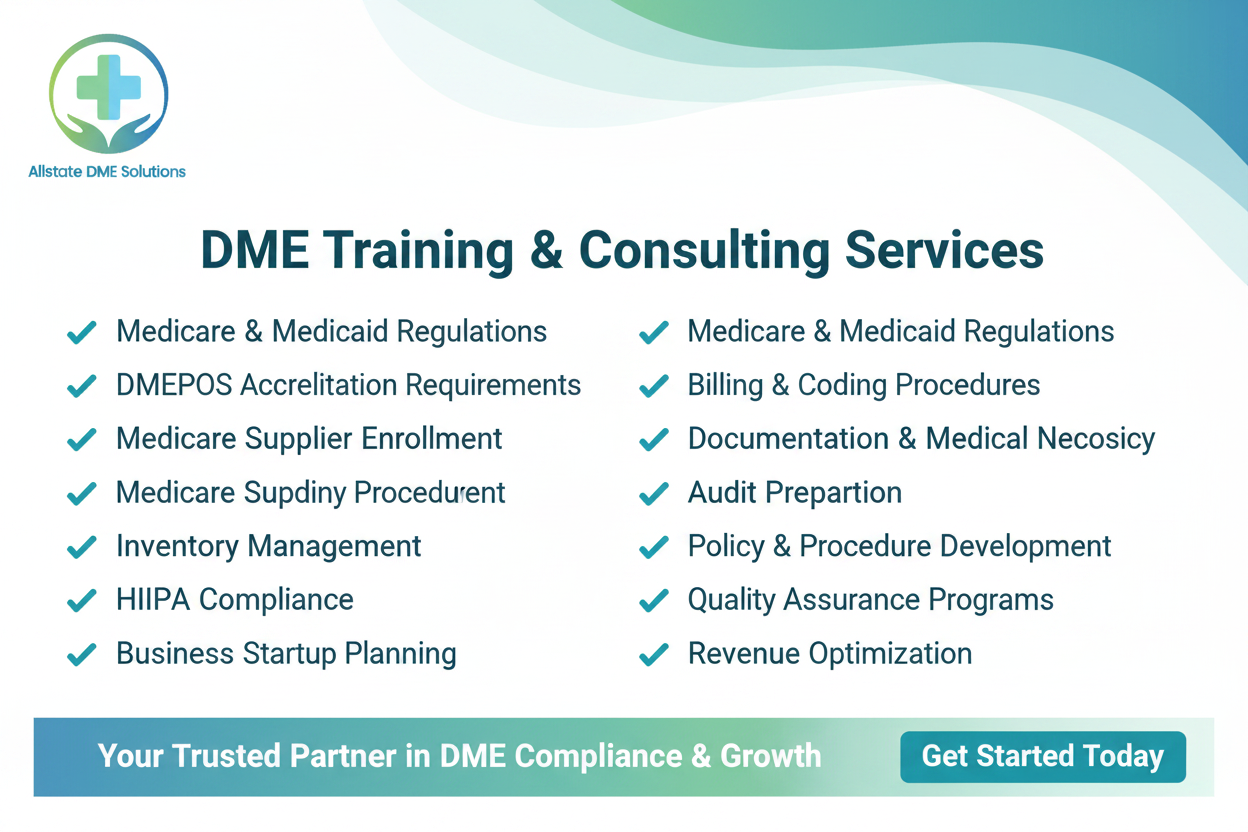
Services often include:
- Business startup consulting
- Florida licensing guidance
- Medicare supplier enrollment assistance
- DMEPOS accreditation preparation
- Policy and procedure development
- Compliance reviews
- Documentation support
- Staff training
- Audit preparation
- Ongoing consulting as regulations evolve
Expert guidance can significantly reduce delays while increasing your chances of a successful application.
Why Choose The DME Consultant?
At The DME Consultant, we specialize in helping healthcare providers establish and grow compliant Durable Medical Equipment businesses throughout Florida and across the United States.
Our consulting services include:
- Florida DME business startup support
- Licensing assistance
- Medicare enrollment guidance
- Accreditation preparation
- Compliance consulting
- Policy and procedure development
- Staff education and training
- Ongoing business support
Whether you’re starting your first DME company or expanding an existing healthcare business, our experienced consultants provide step-by-step guidance tailored to your goals.
Final Thoughts
Starting a Durable Medical Equipment business in Florida requires careful planning, regulatory compliance, and a clear understanding of both state and federal requirements.
From registering your business and obtaining the appropriate licenses to preparing for accreditation and Medicare enrollment, every step plays an important role in building a successful DME company.
Working with experienced DME consultants can simplify the licensing process, reduce costly errors, and help you launch your business with confidence.
If you’re ready to start a DME business in Florida, professional guidance can make the journey faster, easier, and fully compliant.
Frequently Asked Questions (FAQs)
Do I need a DME license to sell medical equipment in Florida?
Most businesses that provide Durable Medical Equipment in Florida must comply with applicable state licensing requirements. Additional federal requirements apply if you plan to bill Medicare.
Is accreditation required for a Florida DME business?
If you intend to become a Medicare supplier, DMEPOS accreditation is generally required before Medicare enrollment can be completed.
How long does it take to obtain a Florida DME license?
The timeline varies depending on your business structure, documentation, licensing requirements, accreditation process, and Medicare enrollment. Many businesses complete the process over several weeks to a few months.
Can I start a DME business without Medicare enrollment?
Yes. Some suppliers operate as cash-pay businesses or work with private insurance providers. However, Medicare enrollment is important for businesses that want to serve Medicare beneficiaries.
What documents are commonly required?
Requirements vary, but businesses are often asked to provide business registration documents, ownership information, facility details, insurance information, policies and procedures, and other supporting records during the licensing and accreditation process.
Why should I hire a DME consultant?
A DME consultant helps streamline the startup process by assisting with licensing, accreditation, Medicare enrollment, compliance, documentation, and operational planning, reducing delays and helping your business launch successfully.