
The healthcare industry is evolving rapidly, and the demand for home-based medical care has never been higher. As more patients receive treatment outside of hospitals and clinics, the need for medical equipment and supplies continues to grow. This presents a valuable opportunity for entrepreneurs looking to enter the healthcare sector.
If you’re interested in starting a medical supply business, understanding the legal and operational requirements is essential. Becoming a licensed medical supply company involves more than simply selling equipment. You’ll need proper licensing, accreditation, compliance procedures, and in many cases, Medicare enrollment.
At The DME Consultant, we help entrepreneurs, healthcare professionals, and business owners navigate the complex process of launching and growing successful Durable Medical Equipment (DME) businesses across the United States.
In this guide, we’ll explain everything you need to know to become a licensed medical supply company and position your business for long-term success.
What Is a Medical Supply Company?
A medical supply company distributes healthcare products, medical devices, and equipment to patients, healthcare facilities, physicians, rehabilitation centers, and home healthcare providers.
Many of these businesses operate as Durable Medical Equipment (DME) Providers, supplying equipment designed for repeated use and prescribed by healthcare professionals.
Common products include:
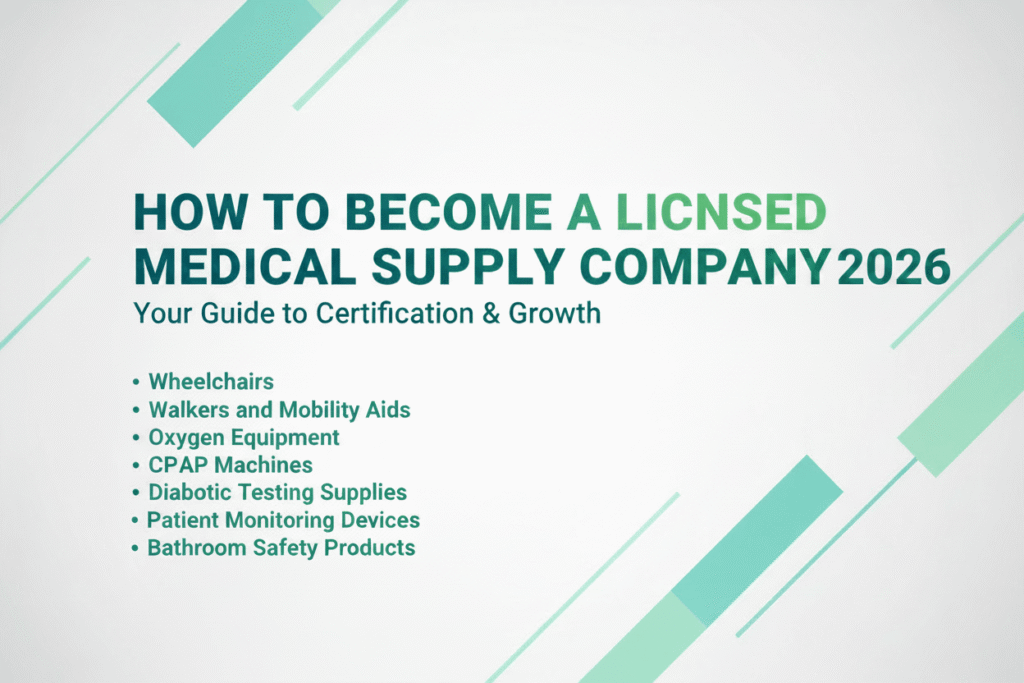
Because these products directly impact patient care, medical supply companies must meet strict regulatory and compliance standards.
Why Start a Medical Supply Company?
The medical equipment industry continues to experience significant growth due to several factors:
Aging Population
Millions of Americans are reaching retirement age each year, increasing demand for home healthcare equipment and mobility products.
Rise in Chronic Conditions
Conditions such as diabetes, sleep apnea, respiratory diseases, and mobility limitations require ongoing access to medical equipment.
Growth of Home Healthcare
Healthcare providers increasingly recommend treatment and recovery at home, creating greater demand for DME products.
Recurring Revenue Opportunities
Many DME businesses benefit from recurring orders, equipment rentals, supply replenishments, and long-term patient relationships.
These trends make the industry attractive for entrepreneurs seeking a stable and scalable healthcare business.
Step 1: Establish Your Business Entity
Before applying for licenses or certifications, you must legally form your company.
Most DME businesses choose one of the following structures:
Limited Liability Company (LLC)
An LLC is often the preferred option because it offers:
- Personal liability protection
- Tax flexibility
- Simplified management structure
- Professional business credibility
Corporation
A corporation may be beneficial for larger organizations seeking investors or planning multiple locations.
Obtain an EIN
After registering your business, obtain an Employer Identification Number (EIN) from the IRS. This is required for tax reporting, banking, and enrollment processes.
You should also establish:
- Business bank accounts
- Business insurance
- Accounting systems
- Business phone numbers
- Professional email addresses
Step 2: Research State Licensing Requirements
Every state has different requirements for medical supply companies.
Depending on your location, you may need:
- Home Medical Equipment License
- Medical Device Distributor License
- Sales Tax Permit
- Local Business License
- State Healthcare Licenses
Failure to obtain the correct licenses can delay your business launch and impact future accreditation efforts.
At The DME Consultant, we assist clients in identifying and obtaining all required state licenses based on their business model and location.
Step 3: Secure a Compliant Business Location
A professional business location is typically required before moving forward with accreditation and Medicare enrollment.
Your facility should include:
Administrative Office Space
A dedicated workspace for managing operations, patient records, billing, and customer service.
Inventory Storage
Secure storage for medical equipment and supplies.
Business Signage
Many accrediting organizations and government agencies require visible business signage.
Communication Systems
Your location should have:
- Dedicated phone service
- Internet access
- Professional email systems
A compliant facility demonstrates legitimacy and operational readiness.
Step 4: Develop Policies and Procedures
One of the most critical components of launching a DME business is creating comprehensive documentation.
Accreditation organizations and Medicare programs expect companies to maintain written policies covering operational procedures.
Required Policy Categories
Patient Services
- Equipment delivery
- Product setup
- Patient education
- Follow-up procedures
Compliance Programs
- HIPAA compliance
- Fraud prevention
- Billing standards
- Documentation requirements
Safety Procedures
- Equipment maintenance
- Infection control
- Emergency preparedness
- Employee responsibilities
Strong policies help ensure consistency, compliance, and quality patient care.
Step 5: Obtain DME Accreditation
Accreditation is often considered the foundation of a successful DME business.
Accrediting organizations evaluate whether your company meets recognized healthcare quality standards.
The accreditation process typically includes:
- Policy review
- Facility inspection
- Staff training verification
- Operational assessment
- Compliance evaluation
Benefits of Accreditation
Accreditation offers numerous advantages:
- Increased credibility
- Improved patient confidence
- Enhanced operational standards
- Medicare enrollment eligibility
- Competitive advantage in the marketplace
Many new business owners underestimate the importance of accreditation, but it is often one of the most significant milestones in the startup process.
Step 6: Enroll as a Medicare Supplier
For many Durable Medical Equipment (DME) Providers, Medicare reimbursement represents a major source of revenue.
After accreditation, businesses may pursue Medicare supplier enrollment.
This process generally includes:
- Completing enrollment applications
- Providing ownership documentation
- Meeting supplier standards
- Passing site inspections
- Submitting required disclosures
Successful enrollment allows qualified suppliers to provide covered equipment to Medicare beneficiaries.
Step 7: Understand Medicare Supplier Standards
Maintaining Medicare compliance is an ongoing responsibility.
Supplier standards typically address:
- Business operations
- Customer service
- Documentation practices
- Advertising compliance
- Equipment delivery procedures
- Complaint resolution processes
Failure to comply can result in penalties, audits, or revocation of supplier privileges.
This is why many business owners choose to work with experienced DME consultants throughout the process.
Step 8: Build Relationships with Referral Sources
A successful medical supply company relies heavily on referrals.
Potential referral partners include:
- Physicians
- Hospitals
- Home health agencies
- Rehabilitation facilities
- Skilled nursing facilities
- Assisted living communities
Strong relationships with healthcare providers can create a steady flow of patients and business opportunities.
Effective Referral Strategies
- Educational presentations
- Provider networking events
- Community outreach programs
- Digital marketing campaigns
- Strategic healthcare partnerships
Referral development should be a core part of your business growth plan.
Step 9: Implement an Ongoing Compliance Program
The healthcare industry is highly regulated, making compliance a continuous process rather than a one-time requirement.
Your compliance program should include:
Employee Training
Staff members should receive regular training on:
- HIPAA requirements
- Documentation standards
- Billing compliance
- Patient privacy regulations
Internal Audits
Routine audits help identify risks before they become serious problems.
Documentation Reviews
Accurate documentation supports both compliance and reimbursement efforts.
Businesses that prioritize compliance are generally better positioned for long-term success.
Step 10: Market Your Medical Supply Business
Once licensed and operational, attracting patients and referral partners becomes a priority.
Create a Professional Website
Your website should include:
- Service pages
- Product information
- Contact forms
- Educational resources
- Referral information
Invest in Local SEO
Search engine optimization helps potential customers find your business online.
Examples of high-intent searches include:
- Medical supply company near me
- DME provider near me
- Home medical equipment supplier
- Wheelchair supplier in my area
Generate Online Reviews
Positive reviews improve trust, credibility, and local search rankings.
Satisfied customers can become one of your most valuable marketing assets.
Common Mistakes New DME Companies Make
Many startup owners encounter avoidable challenges.
Common mistakes include:
- Incomplete licensing applications
- Poor documentation practices
- Delayed accreditation preparation
- Lack of compliance planning
- Insufficient market research
- Weak referral development strategies
Working with experienced consultants can help prevent these costly setbacks.
Why Work with The DME Consultant?
Launching a medical supply company requires navigating multiple regulatory, operational, and accreditation requirements.
The DME Consultant specializes in helping healthcare entrepreneurs establish compliant and successful DME businesses throughout the United States.
Our services include:
- DME startup consulting
- State licensing assistance
- Accreditation preparation
- Medicare enrollment support
- Compliance consulting
- Policy and procedure development
- Business growth guidance
Whether you’re starting from scratch or expanding an existing operation, our team provides expert support every step of the way.
Conclusion
Learning how to Become a Licensed Medical Supply Company requires careful planning, industry knowledge, and a commitment to compliance. From business formation and state licensing to accreditation and Medicare enrollment, every stage plays a vital role in your success.
The growing demand for home healthcare and medical equipment continues to create opportunities for entrepreneurs willing to invest in a properly structured DME business.
With the right strategy, professional guidance, and regulatory support, you can build a trusted medical supply company that serves patients while creating long-term business growth.
Ready to Start Your DME Business?
The DME Consultant helps entrepreneurs and healthcare organizations navigate licensing, accreditation, Medicare enrollment, and compliance requirements with confidence.
Contact our team today to learn how we can help turn your vision into a successful and fully compliant DME business.