
For DME business owners in the United States, Medicare compliance should be part of daily operations rather than a responsibility addressed only when an audit notice arrives. A business that lacks structured compliance systems may face claim denials, payment delays, accreditation challenges, and potential enrollment issues.
Building a compliance-first DME business means creating processes that keep documentation accurate, employees accountable, and business operations aligned with Medicare requirements.
Instead of reacting to regulatory problems, DME suppliers should establish preventive compliance strategies before Medicare scrutiny begins.
Understanding Medicare Audit Risks in the DME Industry
DMEPOS suppliers operate under specific Medicare enrollment, accreditation, billing, and documentation requirements. These requirements help ensure that beneficiaries receive appropriate equipment and that Medicare claims are supported by adequate records.
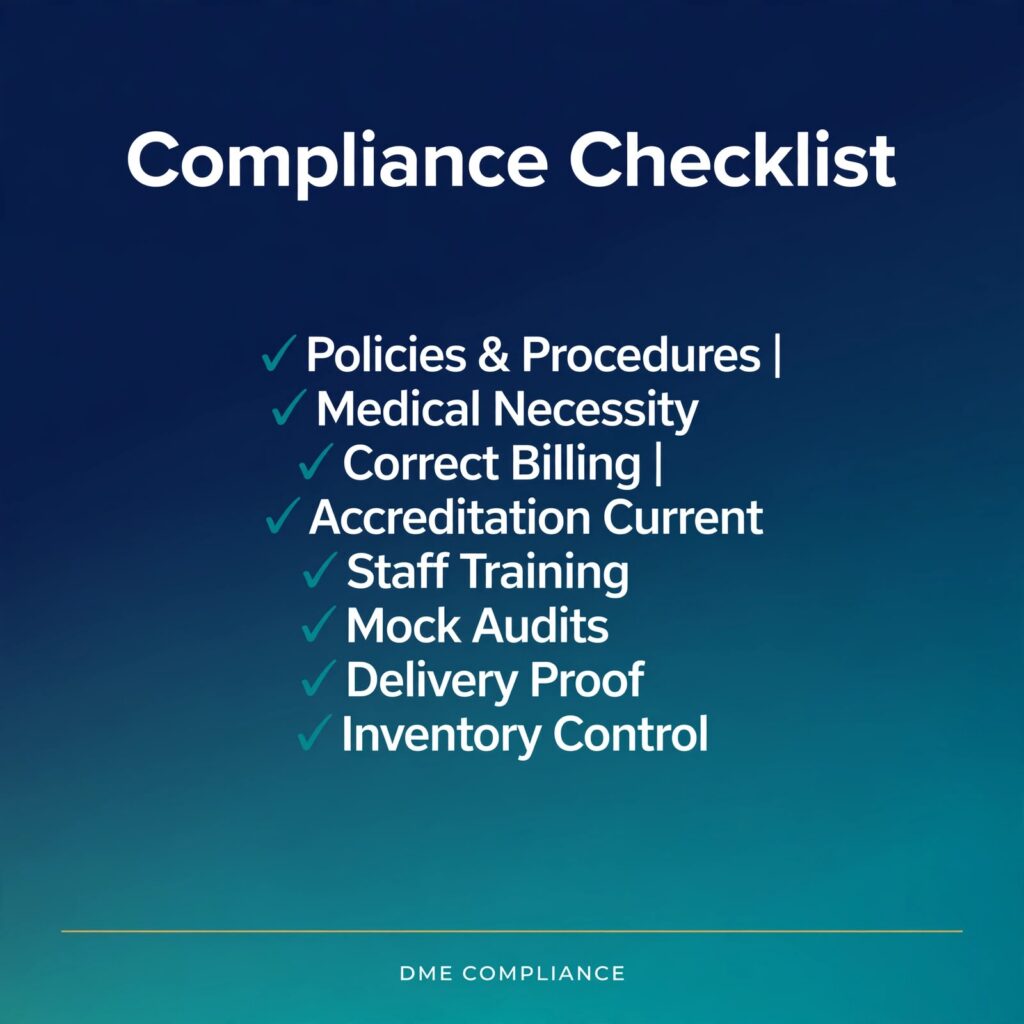
Common compliance weaknesses include:
- Incomplete patient medical records.
- Missing or invalid written orders.
- Insufficient proof of delivery.
- Incorrect HCPCS codes or billing modifiers.
- Outdated accreditation or enrollment information.
- Inadequate employee training.
- Poor recordkeeping and inventory controls.
Identifying these weaknesses early can help businesses prevent avoidable compliance problems.
1. Create a Documented Compliance Management System
A reliable compliance management system provides a framework for managing regulatory responsibilities.
Develop written policies covering patient eligibility verification, order processing, billing, equipment delivery, record retention, and complaint handling.
Each policy should identify the responsible employee, required documentation, and procedures for reporting errors.
Review policies regularly to ensure they reflect current federal requirements, applicable state regulations, and relevant Medicare coverage policies.
2. Strengthen Medical Necessity Verification
Medical necessity documentation is a critical part of Medicare DME claims.
Before providing and billing for equipment, suppliers should verify that the applicable coverage criteria are satisfied and that supporting medical records are available when required.
A Standard Written Order alone does not automatically establish medical necessity. The beneficiary’s medical record must support the applicable coverage requirements.
DME suppliers should review relevant Local Coverage Determinations, policy articles, and documentation requirements for each product category.
This process can reduce the risk of submitting unsupported claims.
3. Build a Reliable Medicare Billing Compliance Process
Billing errors can expose DME businesses to unnecessary financial and regulatory risks.
Create a structured claims review process that checks:
- Beneficiary eligibility and coverage.
- Correct HCPCS codes.
- Required modifiers.
- Written order requirements.
- Applicable prior authorization.
- Documentation supporting the billed service.
- Accurate dates of service.
Implement a pre-billing verification checklist and review denied claims to identify recurring problems.
Your billing process should be based on current Medicare policies rather than assumptions or outdated procedures.
4. Keep Accreditation and Enrollment Information Current
Medicare enrollment and DMEPOS accreditation are closely connected.
Suppliers generally need accreditation from a CMS-approved organization, Medicare enrollment, and an applicable surety bond.
Business owners should maintain accurate practice location information, National Provider Identifiers (NPIs), ownership details, licenses, and accreditation records.
They should also monitor accreditation renewal and survey requirements. CMS guidance effective in 2026 includes a requirement for covered suppliers to be surveyed and reaccredited at least once every 12 months.
Failure to maintain required accreditation can put Medicare billing privileges at risk.
5. Establish Employee Accountability and Training
A compliance-first business needs employees who understand their responsibilities.
Develop training programs for administrative staff, billing specialists, delivery personnel, and management.
Training should cover:
- Medicare supplier standards.
- Patient privacy and HIPAA responsibilities.
- Documentation procedures.
- Equipment delivery requirements.
- Billing compliance.
- Fraud, waste, and abuse awareness.
- Internal reporting and corrective actions.
Maintain employee training records and document competency where applicable.
6. Implement Inventory and Financial Controls
Inventory and financial management are important components of DMEPOS business operations.
Suppliers should maintain records connecting equipment purchases, inventory movements, beneficiary transactions, invoices, and payments.
Establish procedures for tracking equipment, monitoring expenses, reconciling financial records, and identifying unusual transactions.
These controls help demonstrate that equipment and services are properly accounted for and that business operations are financially organized.
7. Use Mock Audits to Identify Compliance Gaps
One of the most effective ways to prepare for Medicare scrutiny is to perform regular mock audits.
Select sample patient files and evaluate whether each record contains the documentation necessary to support the applicable claim.
Review billing records, proof of delivery, employee files, policies, and accreditation documentation.
When weaknesses are identified, create a corrective action plan with clear deadlines and responsible employees.
Documenting improvements helps establish a consistent compliance monitoring process.
8. Develop a Long-Term Medicare Compliance Strategy
Medicare compliance should continue after enrollment and accreditation.
DME businesses should monitor regulatory updates, review operational performance, update policies, and conduct periodic internal assessments.
A proactive compliance strategy can help suppliers reduce financial exposure, improve operational efficiency, and maintain stronger relationships with beneficiaries and healthcare professionals.
Why Professional DME Compliance Consulting Matters
Managing Medicare requirements can become complicated, especially for new DME suppliers and businesses expanding into additional product categories or locations.
Professional DME consulting services can help evaluate existing processes, identify compliance gaps, organize documentation, prepare for accreditation surveys, and strengthen Medicare enrollment readiness.
With the right compliance strategy, business owners can focus on sustainable growth while maintaining the operational standards expected of Medicare suppliers.
Frequently Asked Questions
1. What are the biggest Medicare audit risks for DME suppliers?
Common risks include incomplete medical records, unsupported claims, missing delivery documentation, incorrect coding, and failure to maintain required supplier standards.
2. What is a mock audit for a DME business?
A mock audit is an internal review that evaluates patient files, claims, billing procedures, and compliance records to identify weaknesses before an external review.
3. Does Medicare require DME businesses to maintain written compliance policies?
DME suppliers must maintain and follow applicable policies and procedures under relevant supplier and quality standards. Written policies help demonstrate how those requirements are implemented.
4. Can missing proof of delivery affect Medicare reimbursement?
Yes. Missing required proof of delivery can result in claim denial and potential recovery of overpayments.
5. How often should a DME business conduct internal audits?
There is no single universal frequency for every supplier. A risk-based schedule with regular reviews is a practical approach, especially for high-volume or higher-risk billing areas.
6. Why should DME businesses prepare for audits before Medicare enrollment?
Early preparation helps establish accurate documentation, reliable billing procedures, employee accountability, and compliance systems before the business begins handling Medicare claims.