
Getting Medicare approval is a major milestone for any Durable Medical Equipment (DME) business. However, enrollment does not guarantee long-term success. Many DME suppliers struggle after receiving Medicare approval because they underestimate the operational, financial, and compliance responsibilities involved in running a Medicare-enrolled business.
From billing errors and documentation gaps to poor cash flow management and accreditation issues, small mistakes can create serious financial challenges. Understanding these risks early can help DME business owners build a compliant, profitable, and sustainable operation.
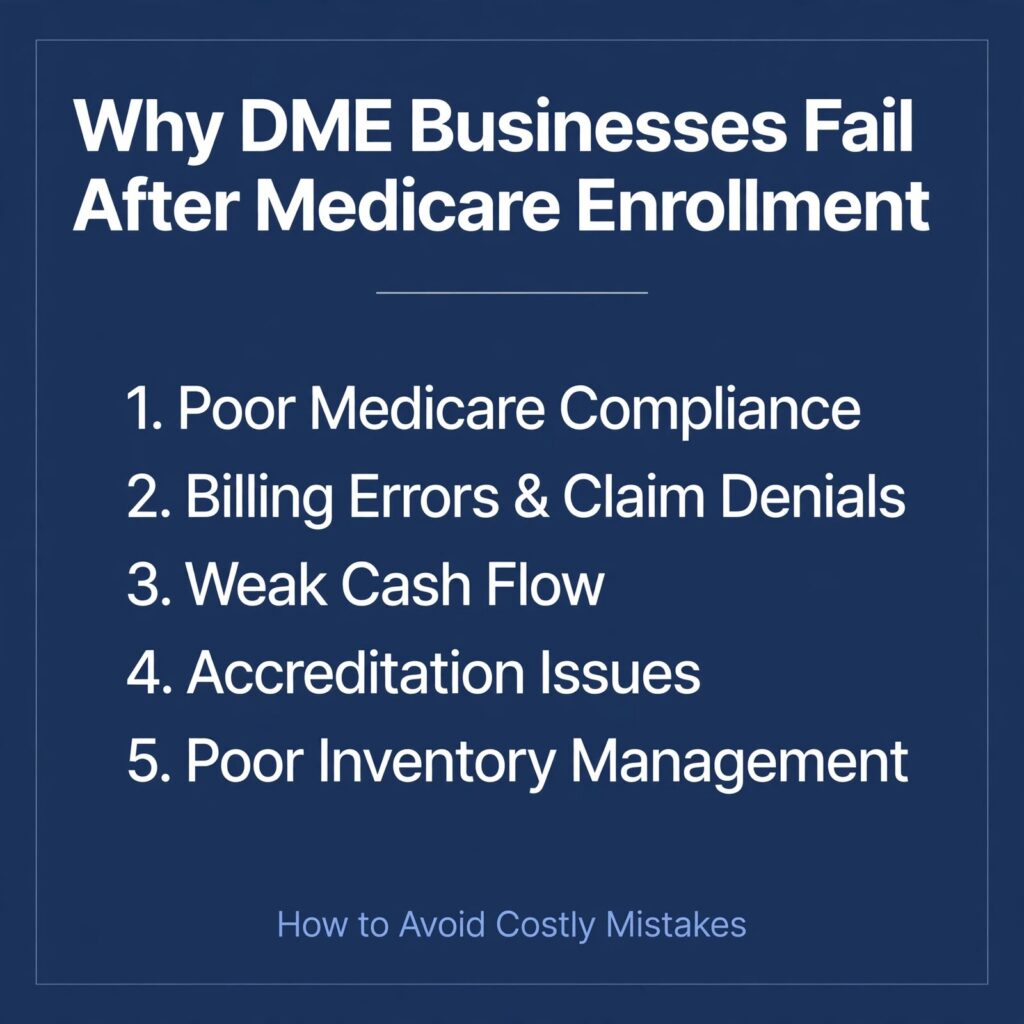
Why Do DME Businesses Fail After Medicare Enrollment?
Medicare enrollment gives suppliers an opportunity to serve eligible beneficiaries and receive reimbursement for covered services. However, maintaining that opportunity requires consistent compliance and effective business management.
1. Poor Understanding of Medicare Compliance Requirements
One of the biggest reasons DME businesses struggle is a lack of ongoing Medicare compliance. Some suppliers focus heavily on obtaining approval but fail to maintain the standards required after enrollment.
Common compliance problems include:
- Incomplete patient records
- Missing supporting documentation
- Failure to maintain required licenses
- Inadequate complaint records
- Failure to update enrollment information
These issues can lead to claim denials, audits, and potential loss of Medicare billing privileges.
2. Medicare Billing Errors and Claim Denials
Billing mistakes can quickly affect a DME company’s financial stability. Incorrect HCPCS codes, missing documentation, inaccurate claim information, and eligibility verification problems can result in rejected or denied claims.
DME suppliers should establish a reliable billing process that includes:
- Verifying Medicare beneficiary eligibility
- Checking coverage requirements before dispensing equipment
- Reviewing physician orders and supporting records
- Using accurate HCPCS codes
- Monitoring claim rejections and denial trends
An effective medical billing system helps reduce preventable errors and improve reimbursement management.
3. Weak Cash Flow and Financial Planning
Many new DME businesses underestimate the costs of operating after Medicare enrollment. Inventory purchases, employee salaries, insurance, rent, software, delivery expenses, and administrative costs can quickly increase operational pressure.
Even when a business generates sales, delayed reimbursements and denied claims can create cash flow problems.
DME owners should maintain a realistic operating budget, monitor accounts receivable, and establish sufficient working capital to manage unexpected expenses.
4. Failure to Maintain Accreditation and Supplier Standards
Medicare approval is not a permanent guarantee of compliance. DME suppliers must continue meeting applicable CMS supplier standards and quality requirements.
Businesses may face serious consequences if they fail to maintain required accreditation, licenses, or other enrollment conditions.
Owners should regularly review their compliance documentation, prepare for accreditation surveys, and ensure that each applicable business location meets the required standards.
5. Poor Inventory and Operational Management
Managing medical equipment requires more than purchasing products and delivering them to customers. Suppliers must maintain accurate inventory records, monitor equipment availability, and establish dependable delivery and customer service processes.
Poor inventory management can result in delayed deliveries, unnecessary expenses, dissatisfied patients, and operational inefficiencies.
How to Avoid Costly Mistakes After Medicare Enrollment
Building a successful DME business requires a proactive approach to compliance, financial management, and daily operations.
Develop a Strong Compliance Management System
Create written policies and procedures covering Medicare billing, patient documentation, complaint handling, employee responsibilities, and supplier standards.
Conduct regular internal reviews to identify problems before they become major compliance issues.
Invest in Accurate Billing and Documentation
Use reliable billing processes and train staff to understand Medicare coverage policies, documentation requirements, and claim submission procedures.
Maintain complete patient records and review denied claims to identify recurring problems.
Monitor Business Performance and Cash Flow
Track monthly revenue, operating expenses, reimbursement delays, outstanding claims, and inventory costs.
Financial monitoring helps business owners make informed decisions and avoid unexpected cash shortages.
Build an Experienced DME Operations Team
A successful DME company needs employees who understand compliance, billing, customer service, inventory management, and Medicare requirements.
Investing in employee training can improve productivity and reduce costly operational mistakes.
Build a Sustainable DME Business Beyond Medicare Approval
Medicare enrollment is the beginning of a business journey, not the final achievement. Long-term success depends on maintaining compliance, controlling expenses, improving billing accuracy, and delivering reliable service to beneficiaries.
DME business owners who invest in proper planning and ongoing operational improvements are better positioned to reduce financial risks and build sustainable businesses.
Frequently Asked Questions
Why do DME businesses fail after Medicare approval?
Many DME businesses struggle because of billing errors, poor cash flow, inadequate documentation, compliance problems, and weak operational management.
Does Medicare enrollment guarantee DME business success?
No. Medicare enrollment provides access to Medicare reimbursement when applicable requirements are met, but businesses must maintain compliance and manage their operations effectively.
What are the most common DME billing mistakes?
Common mistakes include incorrect HCPCS coding, incomplete documentation, eligibility errors, missing physician orders, and failure to meet coverage requirements.
How can a DME business avoid Medicare compliance issues?
Suppliers should maintain accurate records, monitor accreditation and licensing requirements, train employees, and conduct regular internal compliance reviews.
How can DME consulting help a new supplier?
Professional DME consulting can help business owners understand enrollment requirements, strengthen compliance procedures, improve operational workflows, and prepare for audits and accreditation surveys.
Final Thoughts
Running a successful DME business requires much more than obtaining Medicare approval. Suppliers must develop strong compliance practices, manage finances carefully, maintain accurate documentation, and deliver quality services. Avoiding common post-enrollment mistakes can help protect Medicare billing privileges and support long-term business growth.