
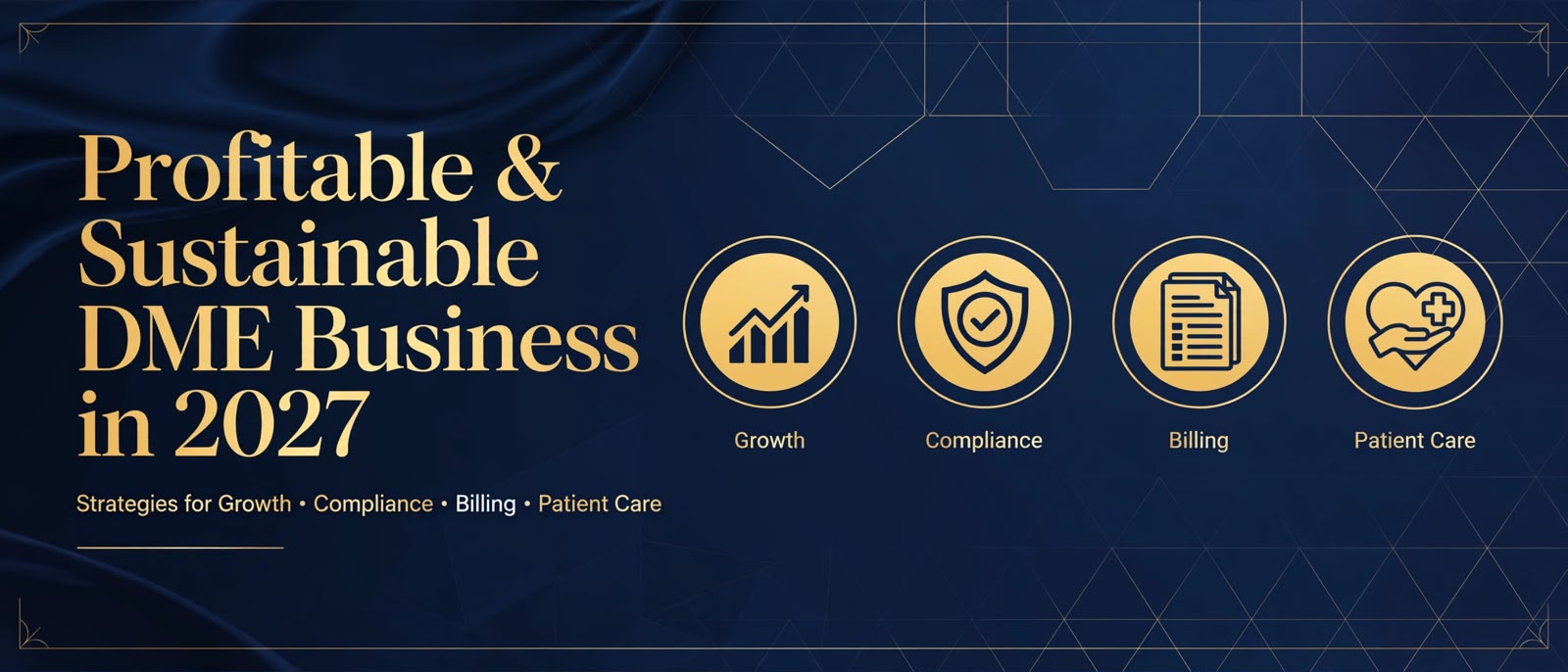
Obtaining Medicare approval is a major achievement for a Durable Medical Equipment (DME) company, but approval alone does not guarantee business success. Many suppliers face challenges after enrollment, including managing reimbursement, maintaining compliance, attracting patients, controlling expenses, and developing reliable operations.
In 2027, the DME industry will require suppliers to think beyond basic enrollment requirements. A successful company needs a business model that supports financial stability, operational efficiency, regulatory compliance, and consistent patient care.
Building a sustainable DME business means creating systems that work efficiently, maintaining strong healthcare relationships, and adapting to changes in the U.S. healthcare environment. With the right planning, suppliers can move beyond simply maintaining Medicare participation and develop a competitive business with long-term growth potential.
1. Turn Medicare Enrollment Into a Strong Business Foundation
Medicare enrollment establishes an important foundation, but suppliers need to translate that approval into an organized and functional business operation.
Establish Clear Operational Processes
Create documented procedures for patient intake, order processing, equipment delivery, billing, customer support, and recordkeeping.
Each department should understand its responsibilities to avoid delays, communication gaps, and unnecessary administrative costs.
Understand Your Medicare Obligations
DME suppliers should understand applicable CMS regulations, Medicare coverage policies, DMEPOS supplier standards, and accreditation requirements.
Regular compliance reviews help ensure that business operations remain aligned with applicable federal and state requirements.
2. Build a Business Model Around Patient Needs
A sustainable DME company should focus on solving patient equipment needs rather than simply selling products.
Identify High-Demand Equipment Categories
Evaluate the demand for products such as:
- Durable mobility equipment
- Home hospital beds
- Respiratory care equipment
- Diabetes testing supplies
- Patient lifting and transfer equipment
- Orthopedic and rehabilitation products
Your selection should reflect market demand, applicable coverage requirements, supplier capabilities, and financial feasibility.
Deliver Better Patient Support
Patients often need assistance beyond equipment delivery. Clear product instructions, timely communication, maintenance support, and appropriate follow-up can improve satisfaction and build trust.
3. Create a Reliable Revenue and Reimbursement System
A DME company can experience financial pressure even when it has a steady flow of orders. This often happens when billing processes are inefficient or reimbursement documentation is incomplete.
Strengthen the Claims Process
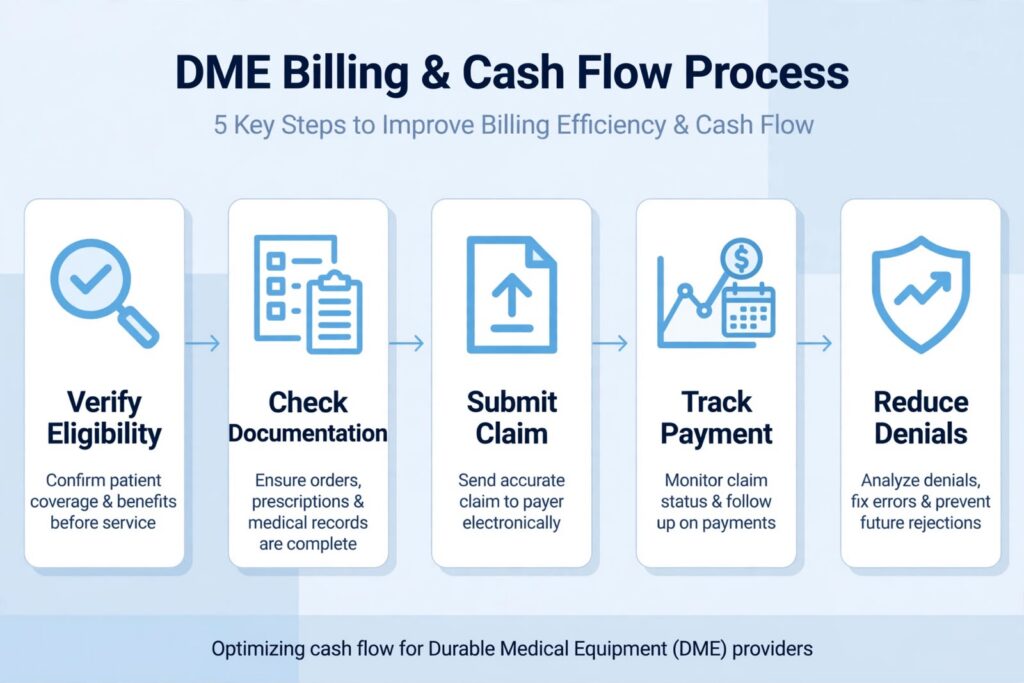
Develop a verification process before submitting Medicare claims. Review patient eligibility, physician orders, medical necessity documentation, coding, and applicable coverage criteria.
Manage Accounts Receivable
Monitor unpaid claims and outstanding balances consistently. Establish a process for identifying delayed payments, correcting claim errors, and following up on outstanding reimbursements.
A well-managed revenue cycle helps businesses maintain healthier cash flow and make better financial decisions.
4. Develop a Strong Compliance Management System
Compliance should be part of everyday operations rather than something suppliers address only before an accreditation survey or audit.
Maintain Complete Documentation
Keep organized records of:
- Patient intake and eligibility verification
- Physician orders and supporting documentation
- Equipment delivery and setup
- Employee training
- Policies and procedures
- Complaint handling and quality assurance
- Required licenses and accreditation records
Conduct Regular Internal Reviews
Schedule periodic compliance assessments to identify gaps and correct problems before they affect business operations.
Suppliers should also assign clear responsibility for monitoring regulatory updates and maintaining required documentation.
5. Strengthen Your Market Position Through Strategic Partnerships
Building a recognizable and trusted DME business requires more than having a website or offering medical equipment.
Develop Healthcare Industry Relationships
Professional relationships with physicians, hospitals, rehabilitation centers, home healthcare agencies, and other appropriate healthcare organizations can create opportunities to serve patients.
Build a Professional Online Presence
A well-organized website, accurate business information, educational content, and clear service descriptions can help potential customers understand your services.
Focus on local SEO, relevant healthcare keywords, and informative content that addresses common patient and provider questions.
All marketing and referral activities should follow applicable Medicare, federal, and state requirements.
6. Invest in Technology and Efficient Workforce Management
As a DME business grows, manual processes can become difficult to manage. Technology can help suppliers improve accuracy and maintain consistent service quality.
Choose Systems That Support Daily Operations
Consider investing in appropriate software for billing, inventory management, order processing, documentation, and delivery coordination.
Train Employees Regularly
Employees should understand their responsibilities, compliance obligations, patient communication procedures, and internal workflows.
A knowledgeable team can reduce operational errors and improve the overall customer experience.
7. Protect Profit Margins Through Better Financial Planning
Revenue growth does not always mean improved profitability. DME suppliers must understand where their money goes and which business activities generate sustainable returns.
Monitor Essential Financial Metrics
Review:
- Monthly operating expenses
- Gross profit by product category
- Equipment purchasing costs
- Accounts receivable
- Claim denial rates
- Delivery and maintenance expenses
- Revenue growth
Build an Emergency Financial Reserve
Unexpected expenses, reimbursement delays, equipment replacement, and regulatory changes can affect business stability.
Maintaining appropriate financial reserves can help suppliers manage temporary challenges without disrupting essential operations.
8. Prepare Your DME Business for Future Industry Changes
The healthcare industry continues to evolve, and DME suppliers must be prepared to adjust their operations.
Follow Healthcare and Reimbursement Developments
Monitor CMS announcements, Medicare coverage updates, competitive bidding developments where applicable, and changes affecting DMEPOS suppliers.
Focus on Scalable Operations
Build processes that can support additional patients, employees, products, and service areas without creating unnecessary complexity.
Instead of expanding too quickly, strengthen your existing business model and invest in improvements that support consistent performance.
Conclusion
Building a successful DME company requires much more than obtaining Medicare approval. Long-term business performance depends on strong compliance systems, reliable reimbursement processes, effective financial planning, technology investment, and patient-focused services.
In 2027, DME suppliers should approach growth strategically by improving existing operations before expanding into new markets or product categories. A company that prioritizes operational quality, regulatory responsibility, and financial sustainability will be better positioned to compete and adapt to the changing U.S. healthcare industry.
Frequently Asked Questions
1. What should a DME supplier do after receiving Medicare approval?
After Medicare approval, suppliers should establish reliable billing procedures, maintain applicable accreditation and compliance requirements, organize patient documentation, manage inventory, and develop effective operational systems.
2. How do DME companies generate revenue?
DME companies generate revenue by providing eligible medical equipment and related services to patients, healthcare organizations, and other customers. Medicare and other insurance reimbursement may contribute to revenue when applicable coverage and billing requirements are satisfied.
3. What makes a DME business sustainable?
A sustainable DME business combines financial planning, regulatory compliance, efficient operations, reliable patient support, and responsible business expansion.
4. How can DME suppliers reduce Medicare claim denials?
Suppliers can reduce preventable denials by verifying eligibility, reviewing physician documentation, following coverage criteria, using appropriate billing codes, and monitoring claim submissions.
5. Does a DME business need accreditation to participate in Medicare?
Applicable DMEPOS accreditation requirements generally apply to Medicare-enrolled suppliers, subject to CMS-recognized exemptions and exceptions. Suppliers should verify the requirements relevant to their business and product categories.
6. How can a new DME company compete with established suppliers?
New suppliers can build a competitive position through focused product offerings, efficient operations, strong customer support, professional healthcare relationships, and a reliable online presence.
7. What are the biggest opportunities for DME businesses in 2027?
Potential opportunities include home-based healthcare support, mobility products, respiratory equipment, patient-centered services, operational technology, and carefully planned market expansion. Actual opportunities depend on local demand and applicable reimbursement policies.