
You Must Be DME Accredited to Bill Medicare!
Healthcare providers entering the Durable Medical Equipment (DME) industry often focus on obtaining licenses, setting up operations, and enrolling with insurance networks. However, one critical requirement is frequently misunderstood: you must be DME accredited before you can bill Medicare for covered DMEPOS products and services.
Many suppliers discover this requirement late in the enrollment process, leading to delays, denied applications, and lost revenue opportunities. Understanding accreditation requirements from the beginning can save significant time, money, and frustration.
At TheDMEConsultant, we help DME suppliers navigate the accreditation process efficiently so they can become Medicare-compliant and ready for reimbursement.
What Is DME Accreditation?
DME accreditation is a formal review process conducted by a Medicare-approved accrediting organization. The purpose is to verify that a supplier meets established quality standards for providing Durable Medical Equipment, Prosthetics, Orthotics, and Supplies (DMEPOS).
Accreditation demonstrates that a supplier:
- Operates according to industry best practices
- Maintains quality patient care standards
- Follows Medicare compliance requirements
- Has proper documentation and policies in place
- Meets operational and safety standards
Without accreditation, most DME suppliers cannot successfully complete Medicare enrollment or receive reimbursement for Medicare-covered services.
Why Is DME Accreditation Required for Medicare?
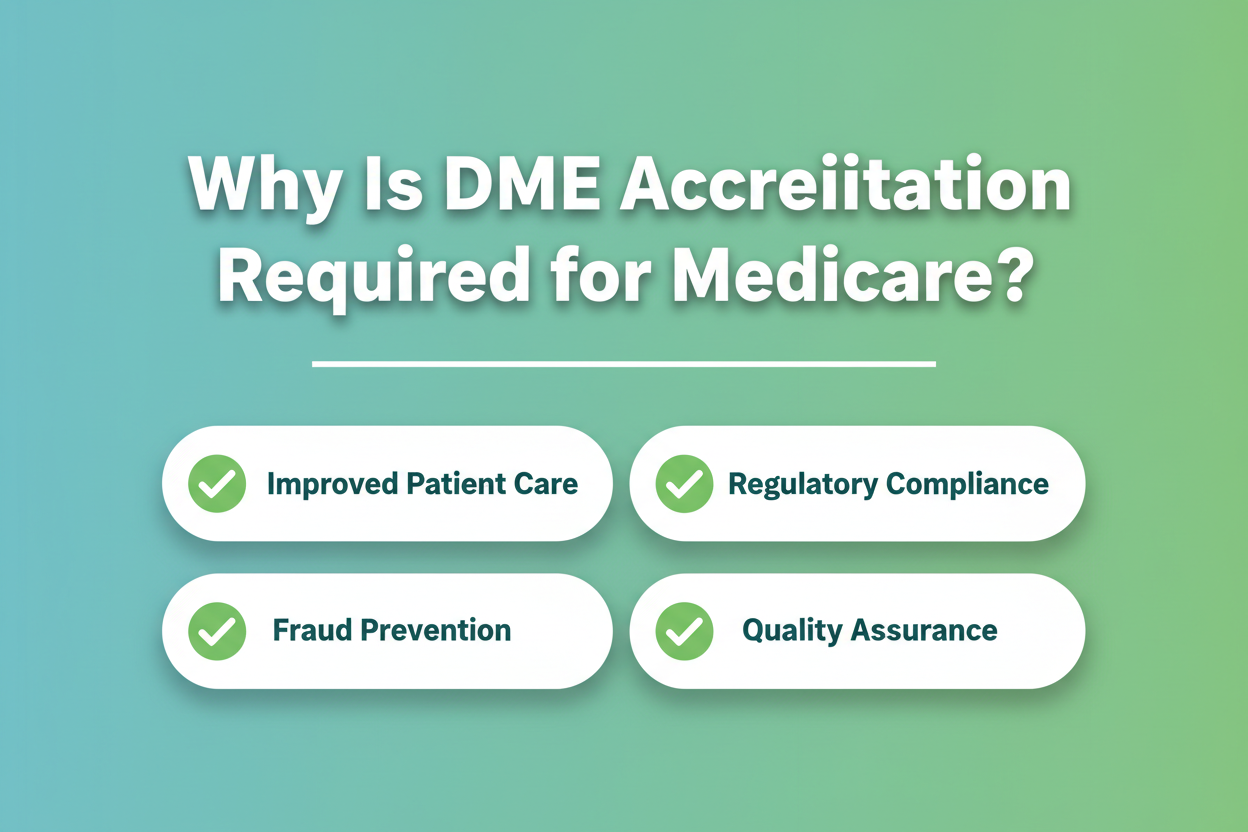
The Centers for Medicare & Medicaid Services (CMS) established accreditation requirements to improve quality and reduce fraud within the DMEPOS industry.
The accreditation process helps ensure:
Improved Patient Care
Patients depend on medical equipment for mobility, respiratory support, diabetes management, and other essential healthcare needs. Accreditation helps ensure suppliers provide safe and effective products and services.
Regulatory Compliance
Accredited suppliers must follow strict operational and documentation standards, reducing compliance risks.
Fraud Prevention
Medicare implemented accreditation requirements as part of broader efforts to reduce fraudulent billing practices and protect taxpayer funds.
Quality Assurance
Accreditation creates standardized expectations across the DME industry, ensuring consistent service delivery nationwide.
Can You Bill Medicare Without DME Accreditation?
In most cases, the answer is no.
A supplier generally must obtain accreditation before Medicare enrollment can be finalized for DMEPOS billing privileges.
Without accreditation, suppliers may face:
- Medicare enrollment delays
- Application denials
- Inability to receive Medicare reimbursement
- Compliance violations
- Revenue loss
For businesses planning to serve Medicare beneficiaries, accreditation should be viewed as a foundational requirement rather than an optional credential.
Understanding DME Accredited for Medicare Requirements
Becoming DME Accredited for Medicare involves meeting comprehensive standards related to business operations, patient care, documentation, and quality management.
Common requirements include:
Business Compliance
- Legal business formation
- Required state licenses
- Tax registration
- Liability insurance coverage
Policy Development
Suppliers must maintain written policies addressing:
- Patient rights
- Complaint resolution
- Equipment maintenance
- Infection control
- Safety procedures
- Emergency preparedness
Documentation Systems
Proper recordkeeping is essential. Accrediting organizations review documentation processes to ensure regulatory compliance.
Staff Training
Organizations must demonstrate that employees receive adequate training and understand compliance responsibilities.
The DME Accreditation Process Step-by-Step
Step 1: Evaluate Readiness
Review current operations, policies, and procedures to identify compliance gaps.
Step 2: Develop Required Documentation
Create or update:
- Policy manuals
- Employee handbooks
- Compliance programs
- Quality improvement plans
Step 3: Select an Accrediting Organization
Choose a CMS-approved accrediting body that aligns with your business model.
Step 4: Submit Application
Complete the accreditation application and provide supporting documentation.
Step 5: Undergo Survey Inspection
Surveyors review operations, records, and compliance practices.
Step 6: Address Findings
If deficiencies are identified, corrective actions must be completed.
Step 7: Receive Accreditation
Once standards are met, accreditation is granted and can be used for Medicare enrollment purposes.
Common Mistakes Suppliers Make
Many suppliers encounter avoidable setbacks during accreditation.
Waiting Too Long
Some businesses begin Medicare enrollment before understanding accreditation requirements.
Incomplete Policies
Generic or outdated policies often fail accreditation reviews.
Poor Documentation
Missing records create significant compliance concerns.
Lack of Staff Preparation
Employees should understand procedures and compliance expectations before surveys occur.
Ignoring Ongoing Compliance
Accreditation is not a one-time event. Suppliers must maintain standards continuously.
Benefits of DME Accredited Services
Working with professional DME Accredited services can significantly reduce complexity.
Benefits include:
- Faster accreditation preparation
- Expert compliance guidance
- Reduced risk of deficiencies
- Improved survey readiness
- Greater confidence during inspections
- Streamlined Medicare enrollment
Professional support often helps suppliers avoid costly mistakes that delay approval.
How TheDMEConsultant Helps DME Suppliers
At TheDMEConsultant, we specialize in helping suppliers successfully navigate accreditation and Medicare compliance requirements.
Our services include:
Accreditation Preparation
We assist with documentation, policy development, and operational readiness.
Compliance Consulting
Our team helps suppliers understand CMS expectations and industry standards.
Survey Readiness
We prepare organizations for accreditation surveys through detailed assessments and guidance.
Medicare Enrollment Support
We help coordinate accreditation efforts with Medicare enrollment requirements.
Ongoing Compliance Assistance
Maintaining accreditation is just as important as obtaining it. We provide continued support to help businesses remain compliant.
The Financial Impact of Accreditation
Many suppliers initially view accreditation as an expense. In reality, accreditation is often a strategic investment.
Benefits include:
- Access to Medicare reimbursement
- Increased patient trust
- Expanded referral opportunities
- Reduced compliance risks
- Stronger operational processes
Without accreditation, suppliers may be unable to access one of the largest healthcare reimbursement systems in the United States.
Industry Outlook
The DMEPOS industry continues to grow due to:
- An aging population
- Increased chronic disease management
- Growth in home healthcare services
- Greater demand for medical equipment
As industry demand expands, Medicare compliance requirements remain critical. Suppliers that establish strong accreditation foundations position themselves for long-term success.
Conclusion
If your goal is to bill Medicare for DMEPOS products and services, accreditation is not merely recommended—it is a fundamental requirement. Obtaining DME accreditation demonstrates compliance, supports quality patient care, and opens the door to Medicare reimbursement opportunities.
Whether you are launching a new DME company or expanding an existing operation, understanding accreditation requirements early can help you avoid delays and costly mistakes.
TheDMEConsultant provides expert guidance, DME Accredited services, compliance support, and accreditation preparation designed to help suppliers achieve Medicare readiness with confidence.
Ready to become DME Accredited for Medicare? Contact TheDMEConsultant today and take the next step toward Medicare compliance and business growth.
4. FAQs
Q1: Is DME accreditation required to bill Medicare?
Yes. Most DMEPOS suppliers must obtain accreditation from a CMS-approved accrediting organization before Medicare enrollment and billing.
Q2: What does DME accredited mean?
It means a supplier has successfully met quality and compliance standards established by a Medicare-approved accrediting body.
Q3: How long does DME accreditation take?
The timeline varies but typically ranges from several weeks to several months depending on preparedness and documentation quality.
Q4: What are DME Accredited services?
These are consulting and compliance services that help suppliers prepare for accreditation, surveys, and Medicare enrollment.
Q5: Can a new DME business apply for accreditation?
Yes. New DME businesses can and should begin accreditation preparation before Medicare enrollment.
Q6: How often must accreditation be renewed?
Most accrediting organizations require periodic renewal and ongoing compliance monitoring.